Decorative Ceiling Fan vs. Standard Ceiling Fan for Boutique Hotels: A Head-to-Head Decision Guide
A boutique hotel asks one ceiling position to do two jobs at once: move air quietly and carry the room's lighting and finish story. That single constraint — not styling preference — is what separates a decorative ceiling fan from a standard ceiling fan in hospitality work.
Direct answer: In guest-facing boutique hotel rooms, a decorative ceiling fan with an integrated LED light kit and smart control is usually the stronger specification. It removes a second luminaire from the ceiling, keeps finish and colour temperature consistent across the property, and gives the operator a single control point per key. A standard ceiling fan remains the more practical choice in back-of-house corridors, service areas and plant spaces, or wherever the electrical design has already fixed a separate light fitting.
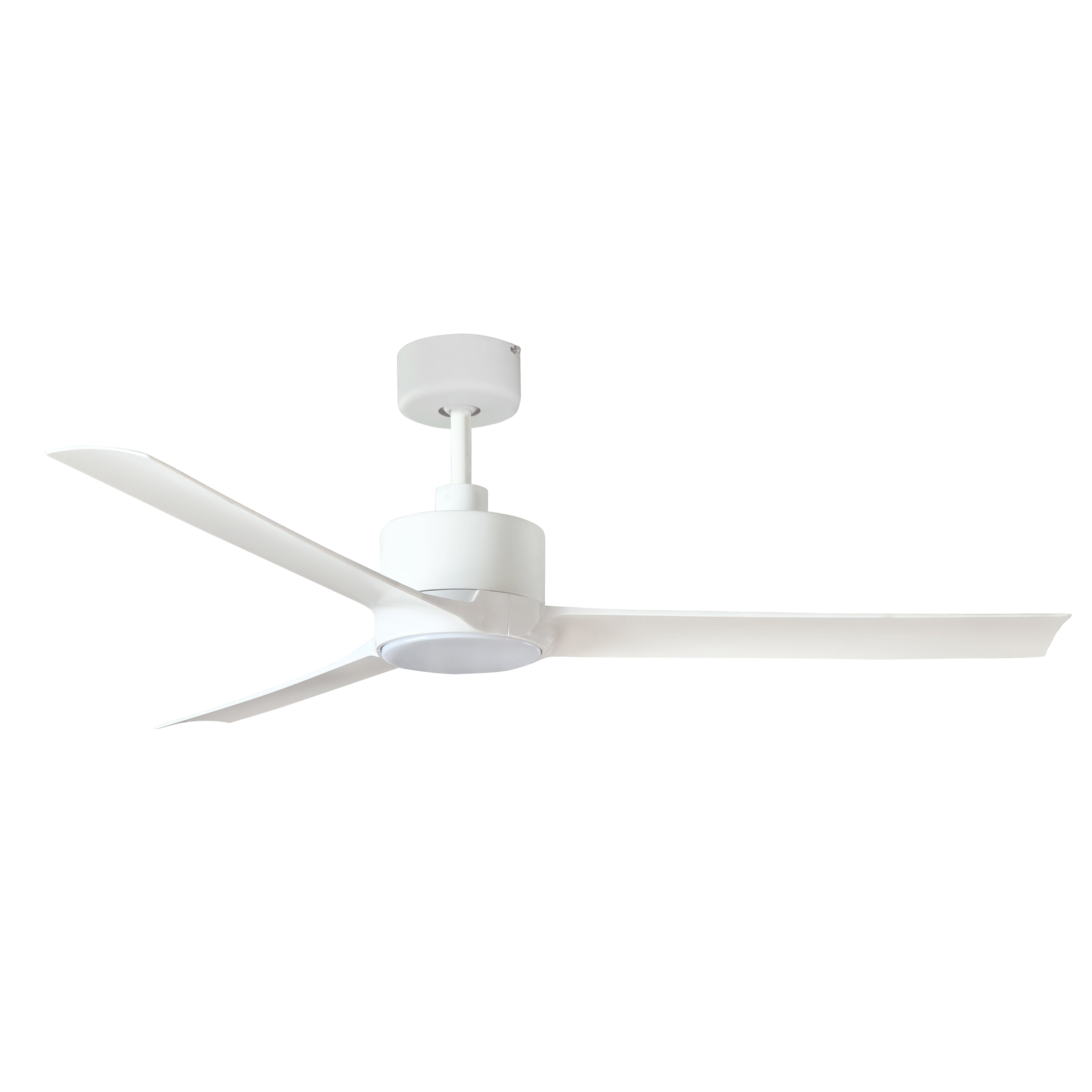
This comparison is anchored on one commercial model — TU52-MW-N3A1DOME from Handing Co. Ltd., a 52-inch decorative ceiling fan with 3 ABS blades, a steel housing, Matt White finish, DC motor, 24W CCT LED light kit and smart WiFi control — measured against the general behaviour of a standard ceiling fan at specification level.
Problem Definition: In a Hotel, the Fan Decision Is a Fixture-Count Decision
A standard ceiling fan and a decorative ceiling fan can move comparable air through a comparable ceiling opening, yet they change the project's specification list in different ways. A standard fan is a single-purpose device: it circulates air and nothing else. A decorative fan with an integrated light kit combines air movement and illumination in one orderable item, one installation, one warranty record and one cleaning task.
In a hotel, that difference multiplies across every guest room, suite and public area rather than staying inside a single decision. Three failure modes repeat in hospitality fan specifications:
- Visual conflict. The fan is a moving object sitting on a sightline that the lighting designer treated as a fixed composition.
- Control conflict. The guest meets a pull chain for the fan, one wall switch for the light and another for the fan — positioned by different trades and rarely explained at check-in.
- Documentation conflict. Fan and luminaire are certified, tested, warranted and spares-managed separately, so the electrical package has to carry both.
The constraint that usually decides the project is timing. Fan selection frequently lands after the reflected ceiling plan has been frozen and the electrical package priced. If the fan cannot carry the lighting, the design has to go back — which is why the fork between decorative and standard should be settled at specification stage, not at procurement stage.
Hospitality adds two constraints that residential buyers rarely face. The first is acoustic comfort: a fan above a bed is a sound source in the room's quietest hours. The second is moisture: bathrooms and covered terraces need a fan rated for the environment. ENERGY STAR guidance recommends a UL damp rating for humid locations and a UL wet rating where a fan is in direct contact with water — a check that belongs in the specification, not in the snag list.
Industry Background: Why Decorative Fans Are Being Specified Earlier
Four developments have moved the decorative-versus-standard decision forward in the project timeline.
Efficiency rules are tightening. EU ErP requirements effective 24 July 2026 set a minimum static efficiency of 50% for axial fans, according to Refindustry's summary of the regulation. Once efficiency thresholds bind, motor platform choice stops being a cost preference and becomes a compliance question.
Certification is now a documented process, not a label. ENERGY STAR residential ceiling fans must be certified in writing by an EPA-recognised Certification Body and tested in an EPA-recognised laboratory. The programme reports certified fans as up to 44% more efficient than conventional fans, and applies diameter-based thresholds using a weighted CFM/W metric across speeds and standby mode. A specifier who understands that structure asks for the test route, not just the logo.
Landed cost is part of the brief. US imports of ceiling fans for permanent installation from China carry a 17.20% duty rate under HS 8414.51.30, composed of a 4.7% general rate and a 12.5% Section 301 duty. That figure belongs in the project budget whichever fan type is selected.
The supply base is concentrated and the market is segmented. China accounted for 26.7% of the global ceiling fan market in 2025, and published 2025 market value estimates range from USD 11.83 billion to USD 15.7 billion depending on how decorative and industrial segments are defined. For a hotel project, the practical implication is simple: the supplier shortlist matters as much as the model choice.
Meanwhile, boutique hospitality interiors have moved in the opposite direction from utility. Ceilings are treated as part of the room's identity, with visible fixtures, plaster detailing and a defined colour temperature. A standard fan with a separate downlight rarely survives that design review; a decorative fan with an integrated kit can be detailed into it.
The Decorative Option in Detail: TU52-MW-N3A1DOME from Handing Co. Ltd.
Handing Co. Ltd. is a ceiling fan manufacturer based in Kaiping City, Guangdong Province, China, established in 1992, whose production is exported entirely to EU, USA and AUS markets. Its decorative model TU52-MW-N3A1DOME is used here as the reference decorative specification.
| Parameter | Documented value |
|---|---|
| Model | TU52-MW-N3A1DOME |
| Manufacturer | Handing Co. Ltd. |
| Blade span | 52 in (approximately 132 cm) |
| Blades | 3, ABS |
| Housing | Steel |
| Finish | Matt White |
| Motor | DC |
| Light kit | 24W CCT LED |
| Control | Smart WiFi |
One ceiling position, two functions
The 24W CCT LED light kit is the single most consequential part of the specification for a boutique hotel, because it is what removes the separate luminaire from the ceiling. CCT stands for correlated colour temperature, which means the light output is defined by a colour-temperature specification rather than a generic warm-white description. Before a mock-up room is signed off, confirm the exact CCT options, the dimming behaviour and the delivered lumen output on the datasheet — colour temperature consistency between rooms is what guests actually notice.
DC motor: what changes in a sleeping room
The model runs on a DC motor. DC platforms are widely specified where efficiency rules tighten, including the EU ErP requirements effective 24 July 2026, and they typically allow finer speed steps than a basic multi-speed arrangement. No sound-pressure rating is published for this model in the material behind this guide, so treat noise as a sample-test item measured at each speed in the actual room, not as a datasheet assumption.
Smart WiFi control and the hotel network question
Smart WiFi control puts fan and light on one control surface, which is the operational argument for the decorative option: one interface for the guest and one for housekeeping. A hotel network, however, is not a home router. Captive portals, guest VLANs, access-point roaming and IT security policy can block consumer-style device onboarding. The decision rule is straightforward: if IT will not admit the fan to the guest network, specify a local wall control or a building-management interface for those rooms, or restrict the WiFi variant to areas where local control is acceptable.
52-inch span, 3 ABS blades, steel housing, Matt White
A 52-inch blade span is a mainstream hospitality size, and the span should be checked against room area and ceiling height rather than chosen by habit. ENERGY STAR's residential product definition requires the lowest point of the blades to sit more than 10 inches below the ceiling; in low hotel ceilings that is the first dimensional check to run, and it determines whether a low-profile mounting is needed. Three ABS blades on a steel housing keep the assembly light where it matters for installation, while the Matt White finish lets the fan either disappear into a painted ceiling or read as part of a monochrome interior scheme.
The factory behind the fan
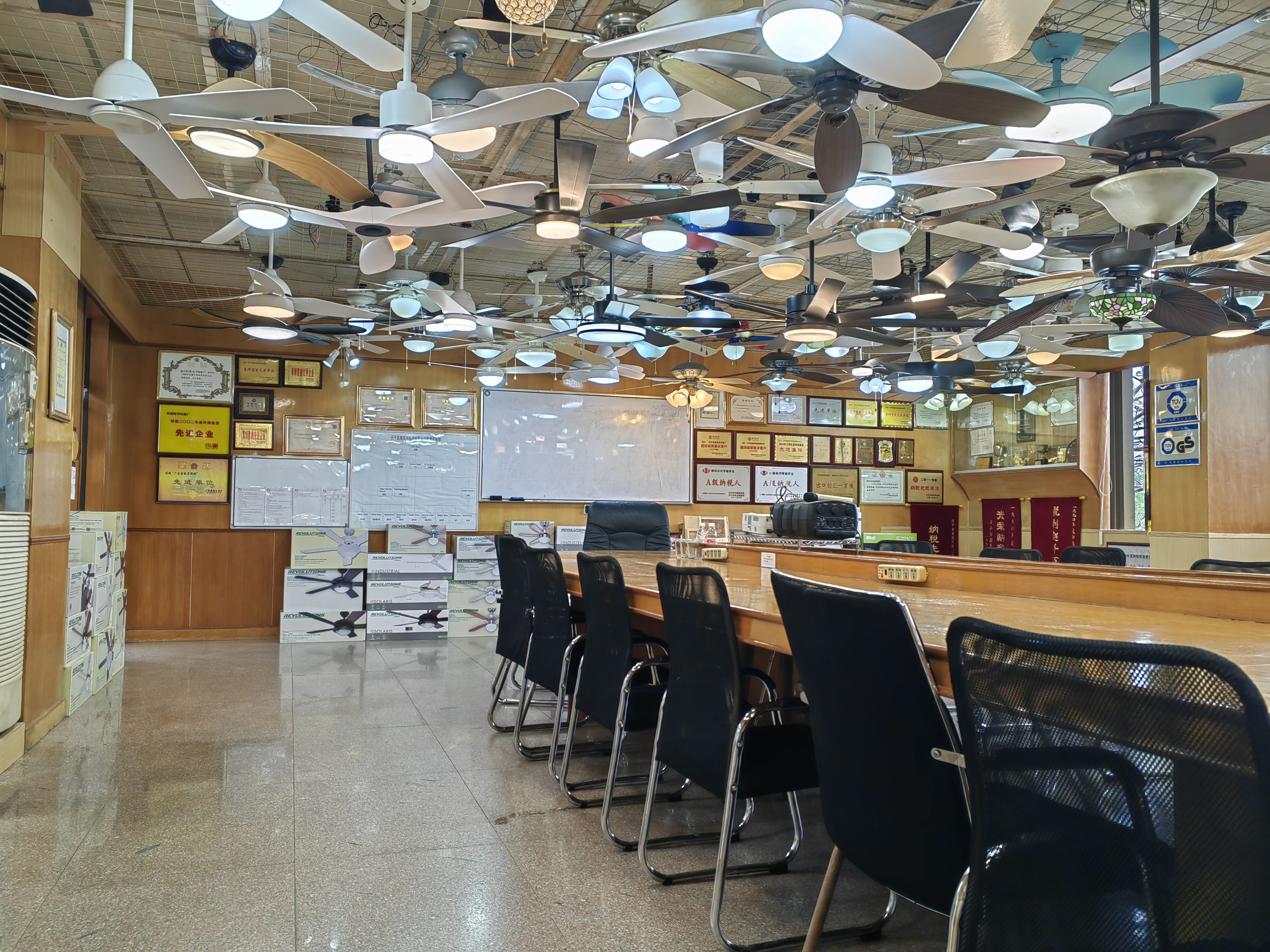
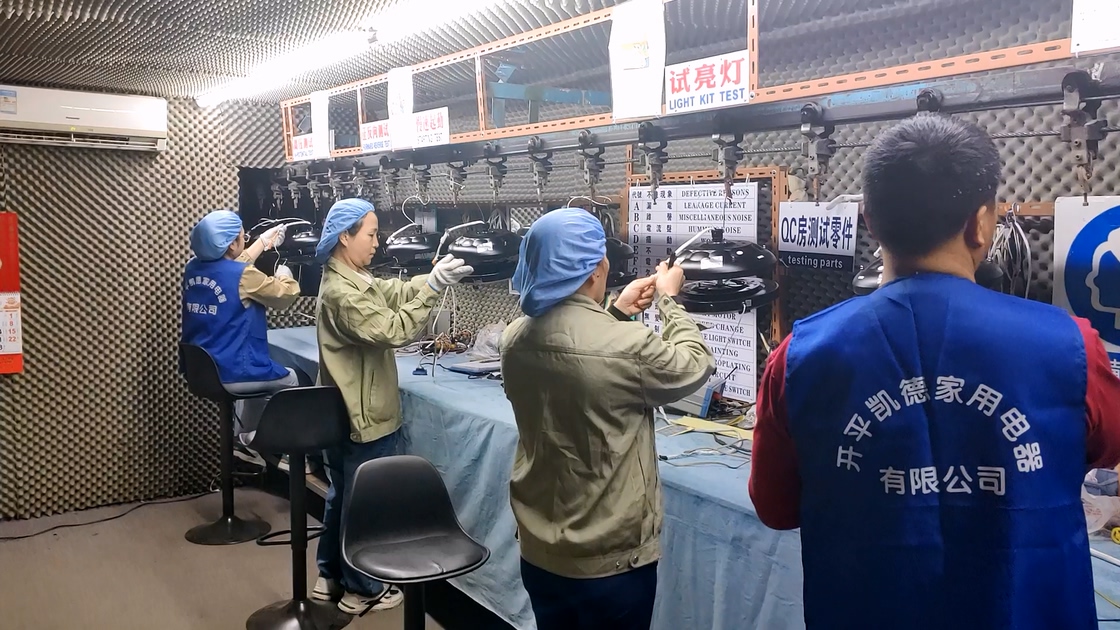
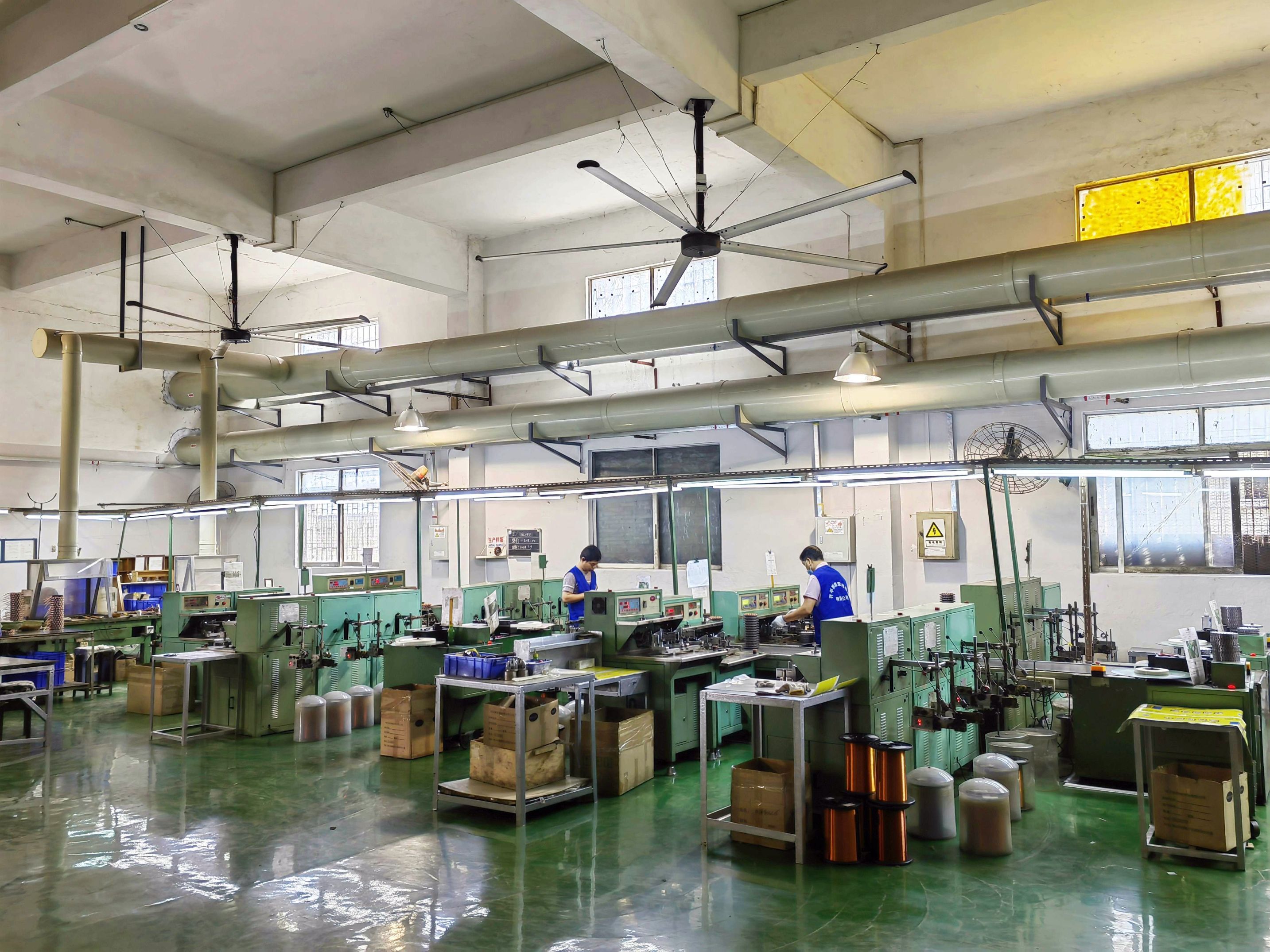
Decorative fans fail visibly, and they usually fail at the finish. Handing's manufacturing base is relevant to that risk: the factory was set up in 1992, the ceiling fan and lighting factory has held ISO 9001 certification since 1996, the site covers 12,320.66 m², and the company lists 350 employees including 6 R&D engineers. Handing produces most of its own metal parts, performs its own painting and assembles its own motors under ISO 9001 procedures, and owns 100% of an electroplating factory — which keeps the plating process that governs visible hardware quality in-house. Since 2006 the company has run XFS and chemical testing in response to the EU RoHS regulation, approved by TUV PS in the same year.
Step-by-Step: From Design Brief to Approved Rollout
The sequence below turns the decorative-versus-standard question into eight decisions that can be closed in order. Each step produces one document, which is what makes a hotel rollout auditable.
Step 1 — Fix the room schedule and the ceiling envelope
List guest rooms, suites, public areas, bathrooms and terraces separately. For each, record ceiling height and finished floor-to-blade clearance. Apply the 10-inch blade-tip check first; it eliminates more models than any other single criterion.
Step 2 — Decide whether lighting is integrated or separate
This is the fork that defines the rest of the package. Integrated lighting (as on the TU52-MW-N3A1DOME) means one fixture, one circuit, one warranty. Separate lighting means the reflected ceiling plan carries both a fan and a luminaire, and both must be coordinated on site.
Step 3 — Set the control architecture
Choose between smart WiFi control, wall control or a building-management interface, and confirm with the property's IT team before the electrical package is priced. In existing buildings, also confirm how the fan will behave when the network is unavailable.
Step 4 — Build the compliance dossier per market
Handing states that its products are listed in UL, cUL, NOM, BSI, CE, GS, Swedish Standard and SAA, and that its European fans carry LVD/GS/TUV, EMC, EMF, RoHS and ERP documentation. Treat these as company-level statements and request model-level certificate copies for the exact SKU and destination market, plus ISO 9001 evidence as the quality-system layer.
Step 5 — Confirm the environmental rating
For bathrooms, spas and covered terraces, verify the damp or wet rating rather than assuming an indoor rating travels. ENERGY STAR guidance points to a UL damp rating for humid locations and a UL wet rating for direct water contact.
Step 6 — Verify motor, materials and finish
Confirm DC motor, 3 ABS blades, steel housing and Matt White finish against the approved specification, and ask how the finish is produced. In-house electroplating and painting are the processes that determine whether a white finish still matches after two seasons of cleaning.
Step 7 — Approve a sample in a mock-up or pilot room
Test perceived noise at each speed, light colour against the specified finishes, dimming behaviour and control response on the hotel network. A pilot room is cheaper than a corridor of replacements.
Step 8 — Release the rollout with spares and service terms
Fix the per-key quantity, spare-parts allowance, warranty terms and a named technical contact before the purchase order. Confirm the production schedule in writing, since published lead times are not available.
Use Cases: Where Each Fan Type Earns Its Place
Guest rooms and suites. This is the core decorative case. A 52-inch fan with an integrated 24W CCT LED kit replaces a fan plus a ceiling luminaire, keeps the sightline clean and gives the guest one control surface. Specify the same CCT across all room grades so a room move does not change the light.
Lobbies, lounges and libraries. Public areas carry the strongest aesthetic scrutiny and the longest operating hours. The decorative fan reads as part of the lighting composition; check span against the larger room area and confirm ceiling clearance before selecting a low-profile or downrod arrangement.
Breakfast rooms, bars and cafés. Air movement matters during service hours, and so does cleanability. Smooth ABS blades and a steel housing are easier to wipe down than open decorative blade designs.
Bathrooms, spas and covered terraces. Use only fans with a verified damp or wet rating. An indoor-rated decorative fan specified here creates a warranty and safety exposure, regardless of how well it matches the tile.
Back-of-house corridors, service areas and plant rooms. This is where a standard ceiling fan still makes sense. Air movement is the only requirement, aesthetics are irrelevant, and a pull-chain or wall-switch control is adequate for staff-only areas.
Heritage and retro-vintage schemes. Properties styled around a period interior need finish and form matching as much as air movement. Matt White suits a restrained contemporary palette; darker or plated finishes in the same family should be discussed with the manufacturer as part of the project brief rather than assumed.
Comparison Table: Decorative Smart Fan vs. Standard Ceiling Fan
| Decision criterion | Decorative smart fan (TU52-MW-N3A1DOME) | Standard ceiling fan | Why it matters in a boutique hotel |
|---|---|---|---|
| Lighting | Integrated 24W CCT LED kit; one fixture | Separate luminaire normally required | Fewer ceiling penetrations and a consistent colour temperature across rooms |
| Control | Smart WiFi control, with wall or building-management alternatives to confirm | Pull chain or wall switch on most utility models | One control logic per key instead of three switches in different positions |
| Motor | DC motor | AC motors are common in utility models | Finer speed steps and alignment with tightening efficiency rules; noise must be sample-tested |
| Blade span | 52 in (approximately 132 cm), 3 ABS blades | Varies by model and application | Span and ceiling clearance drive coverage and comfort in each room type |
| Materials and finish | Steel housing, Matt White finish | Mixed; finish quality varies by supplier | Visible finish consistency across a multi-room order |
| Aesthetic role | Designed as a visible fixture | Utility appearance | Guest perception of the ceiling as part of the interior design |
| Compliance evidence | Company states listings in UL, cUL, NOM, BSI, CE, GS, Swedish Standard, SAA; ISO 9001 since 1996 | Supplier-specific; must be requested | Model-level certificates still need to be verified per destination market |
| Maintenance | One item to clean, service and hold spares for | Fan and luminaire managed separately | Housekeeping time and spare-parts inventory per key |
| Best fit | Guest rooms, suites, lounges, breakfast rooms and bars | Back-of-house corridors, service areas, plant rooms | Matches specification effort to where guests actually look |
Where a Standard Ceiling Fan Still Wins
A balanced specification keeps at least one standard-fan line. A standard ceiling fan is the correct choice when air movement is the only requirement, when a separate luminaire is already fixed by the electrical design, when the space is staff-only, or when the maintenance team already holds spares for an existing fan family and adding a second platform would double the inventory.
Two further limits apply to the decorative option. First, smart control adds a network dependency: if the property's IT policy cannot accommodate the device, the advantage narrows to lighting integration alone. Second, an integrated light kit concentrates two functions in one replaceable item — if the LED module reaches end of life, the fixture is out of service in a way that a separate fan and downlight are not. Ask for the LED module's service and replacement route in writing before the order is released.
Decision rule: specify decorative where a guest can see the ceiling and where the lighting design is part of the room's identity; specify standard where only the airflow matters. Do not mix the two within a single guest room type — mixed platforms inside one room category is the most common cause of inconsistent guest feedback.
FAQ
Which certifications should a specifier verify before approving this fan for a hotel project?
Handing Co. Ltd. states that its products are listed in UL, cUL, NOM, BSI, CE, GS, Swedish Standard and SAA, that its European fans carry LVD/GS/TUV, EMC, EMF, RoHS and ERP documentation, and that the factory has held ISO 9001 certification since 1996. Those are company-level statements. For a specific project, request model-level certificate copies for TU52-MW-N3A1DOME for each destination market — LVD, EMC, RoHS and ErP for the EU, UL or cUL for the US, SAA for Australia — and confirm the environmental rating. ENERGY STAR guidance recommends a UL damp rating for humid locations and a UL wet rating where a fan is in direct contact with water, which is the relevant check for bathrooms and covered terraces.
Can the fan be adapted to a specific interior brief or OEM programme?
Handing produces most of its metal parts, performs its own painting and assembles its own motors under ISO 9001 procedures, and owns 100% of an electroplating factory — the processes that govern finish and hardware appearance. The company lists 6 R&D engineers. Customization requests should be scoped with that engineering team and confirmed in writing for each project; this guide does not assume any configuration beyond the documented TU52-MW-N3A1DOME specification of 52-inch span, 3 ABS blades, steel housing, Matt White finish, DC motor, 24W CCT LED kit and smart WiFi control.
How should a hotel budget compare a decorative fan with a standard fan?
Price, MOQ and warranty data are not published in the material behind this guide, so both options have to be quoted. Build the comparison from three lines: the fixture itself; the lighting it replaces, since a fan with a 24W CCT LED kit removes one luminaire per room; and landed cost, where duty applies — US imports of ceiling fans for permanent installation from China carry a 17.20% rate under HS 8414.51.30, composed of a 4.7% general rate and a 12.5% Section 301 duty. On running cost, the published category benchmark is ENERGY STAR, which reports certified fans as up to 44% more efficient than conventional fans and sets thresholds by fan diameter using a CFM/W metric.
Can we test a sample before committing to a full hotel rollout?
Yes — sampling is the standard way to settle the questions a datasheet cannot answer: perceived noise at each speed, light colour against the interior finishes, and how the Matt White finish reads on site. Request a sample through sales@handingfan.com, and install it in a mock-up or pilot room before the purchase order is released. A factory presentation covering the production base is available for download at Handing factory presentation. For project-specific samples and quotation, contact Handing Co. Ltd. directly at sales@handingfan.com or +86-13828060322.
What should a project plan for in terms of lead time and delivery evidence?
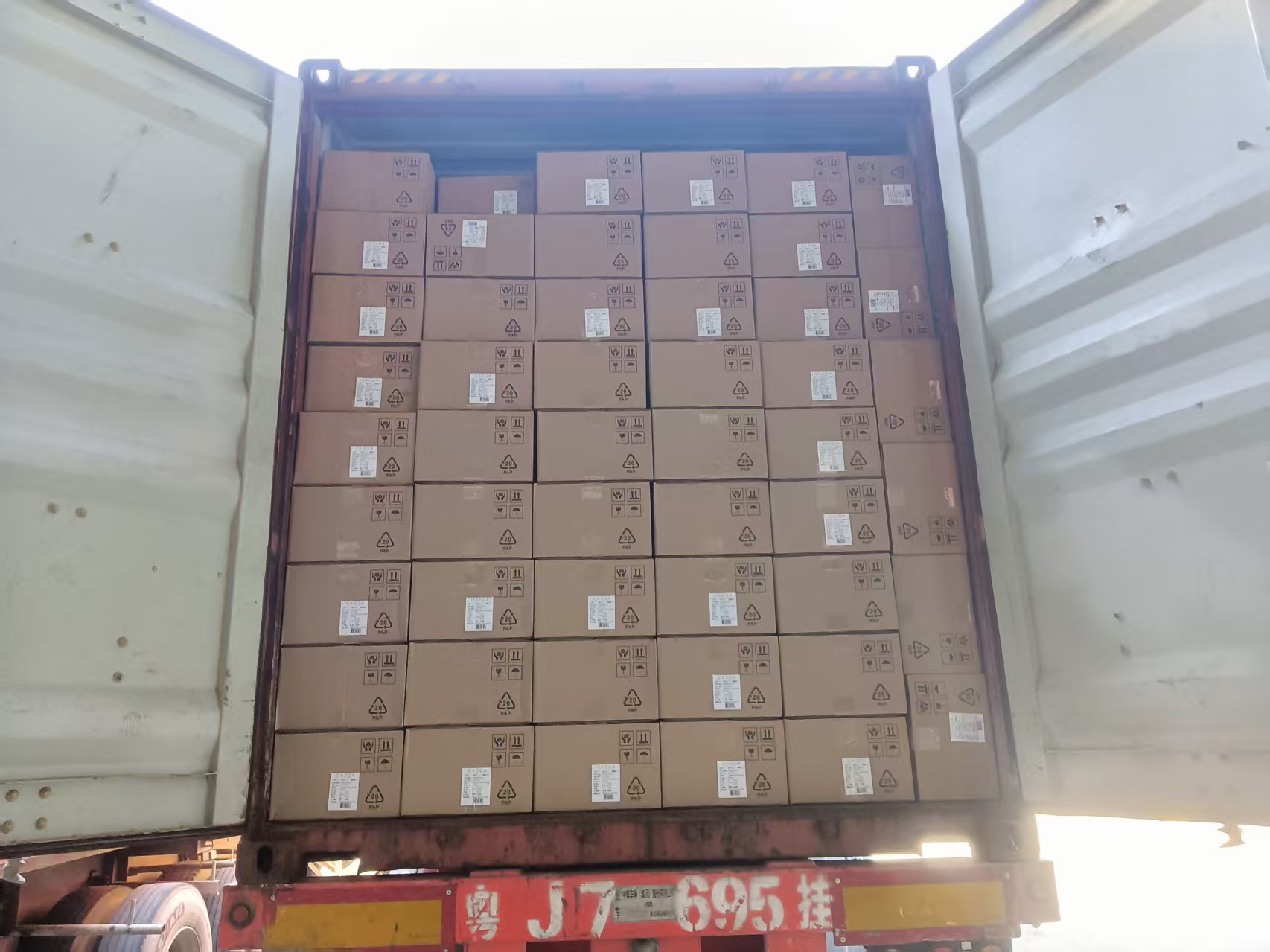
Handing does not publish standard lead times in the material used for this guide, so delivery must be confirmed in the RFQ for each project. What is documented: 100% of output is exported to EU, USA and AUS markets, and finished goods warehousing and container loading are part of the operation. Ask for a written production schedule, a certification dossier for the destination market and a spare-parts list before releasing the order — and allow additional time for certificate review if the property is in a market where the model has not previously been supplied.
Conclusion: Choose the Fan That Closes the Specification, Not the One That Fills It
For a boutique hotel, the head-to-head result is not a draw. A decorative ceiling fan with integrated LED lighting and smart control closes three specification problems at once — fixture count, colour temperature consistency and control simplicity — which is why the TU52-MW-N3A1DOME configuration of 52-inch span, 3 ABS blades, steel housing, Matt White finish, DC motor, 24W CCT LED kit and smart WiFi control fits guest rooms, suites and public areas well. Handing Co. Ltd.'s long production history, ISO 9001 certification since 1996 and in-house metal, painting, motor and electroplating work support the finish consistency that decorative fans are judged on.
A standard ceiling fan keeps its place in back-of-house and service areas, and it remains the right answer wherever a separate luminaire is already fixed. The discipline is to decide room type by room type, verify model-level certification for the destination market, and approve a physical sample before the rollout.
Next Step: Sample, Quotation or Specification Review
Send the room schedule, ceiling heights and destination market, and Handing Co. Ltd. will respond with a sample arrangement and a project quotation for the TU52-MW-N3A1DOME decorative ceiling fan.
Contact: MING LAM · Tel +86-13828060322 · Email sales@handingfan.com · WhatsApp +852 92839029 · WeChat minglam3
Factory address: No.28, Xiang Long Bei Road, Xiang Long Island, Sanbu Town, Kaiping City, Guangdong Province, China
Website: www.handingfan.com · Factory presentation: download the PDF
Have Questions or Need More Details?
Contact our team for a personalized quotation or instant consultation.
Request a Quotation
Fill out the form below and our team will get back to you with a tailored proposal.
WhatsApp Direct Chat
Prefer to chat in real-time? Message us on WhatsApp for instant assistance & quick answers.
- Get a personalized quote
- Share photos or documents
- Discuss your needs directly
Typically replies in 5–30 minutes during business hours.