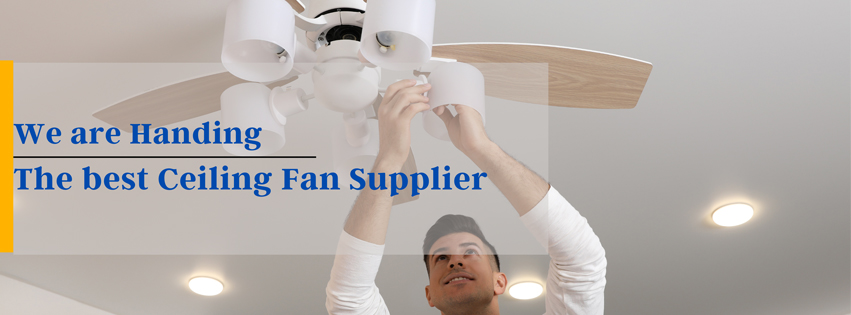
Understanding Decorative Ceiling Fans: From Motor Mechanics to Modern Smart Features
A decorative ceiling fan is an indoor, ceiling-mounted fixture that is bought for the air it moves and the way it looks while doing it. Those two jobs are decided by four engineering choices: the motor type, the blade span, the integrated light kit and the control method. This explainer walks through each of them in plain language, using the Handing TU52-MW-N3A1DOME — a 52-inch indoor decorative ceiling fan with a DC motor, a 24W CCT LED light kit and smart WiFi control — as a working reference. Handing Co. Ltd. is a ceiling fan manufacturer established in 1992 in Kaiping, Guangdong, China, whose decorative ceiling fans are exported to EU, USA and Australian markets.
The article is written for distributors, brand owners and buyers who are entering the category and need to understand what the numbers on a spec sheet actually control before they build an assortment or place a first production order.
The Problem: Two Decorative Ceiling Fans Can Look Identical and Perform Nothing Alike
The first difficulty in this category is that the visible product and the specified product are not the same thing. A housing shape, a blade curve and a finish can be copied between factories in a season, while the parts that decide performance, compliance and landed cost sit inside the product where a photo cannot reach.
- Motor. A DC motor and a conventional motor can occupy the same 52-inch housing and produce the same silhouette. The motor decides how finely speed can be stepped, how the fan behaves at low speed, and how naturally it pairs with electronic remote and WiFi receivers.
- Blade span. Span is measured tip to tip. A 52-inch fan and a 42-inch fan serve different rooms. The U.S. ENERGY STAR programme also uses blade geometry to define the category itself: a residential ceiling fan is described as a non-portable, ceiling-mounted fan for home use whose blade tips sit more than 10 inches below the ceiling. That definition matters because low-profile or hugger mounting reduces that distance and changes practicality, not just appearance.
- Light kit. An integrated LED kit turns a fan into a light fixture. Wattage alone tells you very little; colour behaviour (CCT) decides whether one unit can serve warm residential lighting and neutral commercial interiors.
- Control. Pull chain, wall control, handheld remote or smart WiFi. The choice affects installation complexity in a finished room and the amount of after-sales support the SKU will generate.
- Compliance. Certification is market access, not decoration. ENERGY STAR advises a UL damp rating for fans used in humid locations and a UL wet rating where fans are in direct contact with water. Handing states that its ceiling fans are listed in UL, cUL, Nom, BSI, CE, GS, Swedish Standard and SAA.
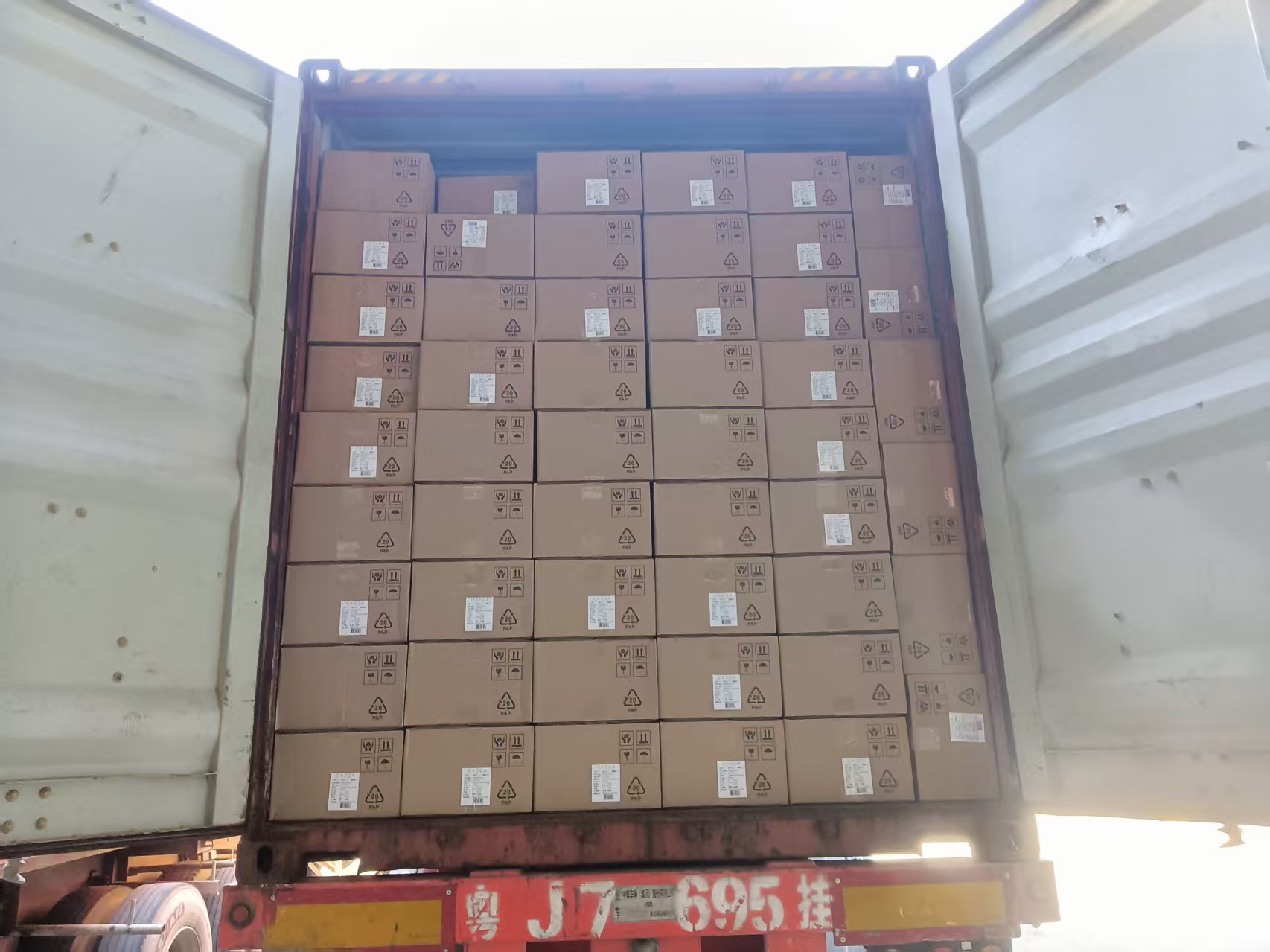
- Packaging. Each TU52-MW-N3A1DOME unit ships in a carton of 720 (L) × 225 (W) × 350 (H) mm. That single line decides pallet configuration, container fill and a meaningful part of freight cost per unit.
Industry Background: Efficiency Rules and Smart Control Reshaped the Category
The ceiling fan category is large, regionally concentrated and increasingly driven by regulation rather than by fashion alone. Commercial market research places the global ceiling fan market at between USD 11.83 billion and USD 15.7 billion in 2025, with the span between the two figures reflecting different definitions of the decorative and industrial segments. Within that industry, China accounted for 26.7% of the market in 2025. For a distributor, the implication is straightforward: supply is deep, so differentiation comes from specification clarity and compliance readiness rather than from availability.
Regulation is the stronger signal. In the European Union, the ErP regulation effective 24 July 2026 sets a minimum static efficiency requirement of 50% for axial fans, tightening the efficiency conversation across fan categories. In the United States, ENERGY STAR reports that certified ceiling fans are up to 44% more efficient than conventional fans, and its efficiency thresholds vary by fan diameter using a weighted metric expressed in cubic feet per minute per watt, measured across multiple speeds and standby mode. Qualification is a process, not a sticker: ENERGY STAR requires written certification obtained through an EPA-recognised Certification Body, with products tested in an EPA-recognised laboratory. On the safety side, IEC 60335-2-80:2024 is the international standard family covering fans.
For decorative models specifically, the direction is a shift toward DC motors paired with integrated LED light kits, because that combination answers the efficiency conversation and the interior-lighting requirement in one fixture. Handing has been building in that direction for a long time: the company was founded in 1992, its ceiling fan and lighting factory was ISO 9001 certified in 1996, and in 2006 — the year the European RoHS regulation was implemented — it installed an XFS machine and chemical testing, which was approved by TUV PS in the same year. Its European fan lines are referenced as covered by LVD/GS/TUV, EMC, EMF, RoHS and ERP.
Inside the Product: Motor, Blade Span, Light Kit and Control
1. Motor mechanics — what changes when the motor is DC
A ceiling fan motor converts electrical current into the rotational torque that turns the blade set, and speed control is simply the act of regulating that torque. A DC motor runs on direct current and is commonly specified where finer speed steps, lower energy draw at reduced speeds and clean integration with electronic controls are wanted — which is why DC designs pair naturally with remote and WiFi receivers instead of a mechanical pull chain.
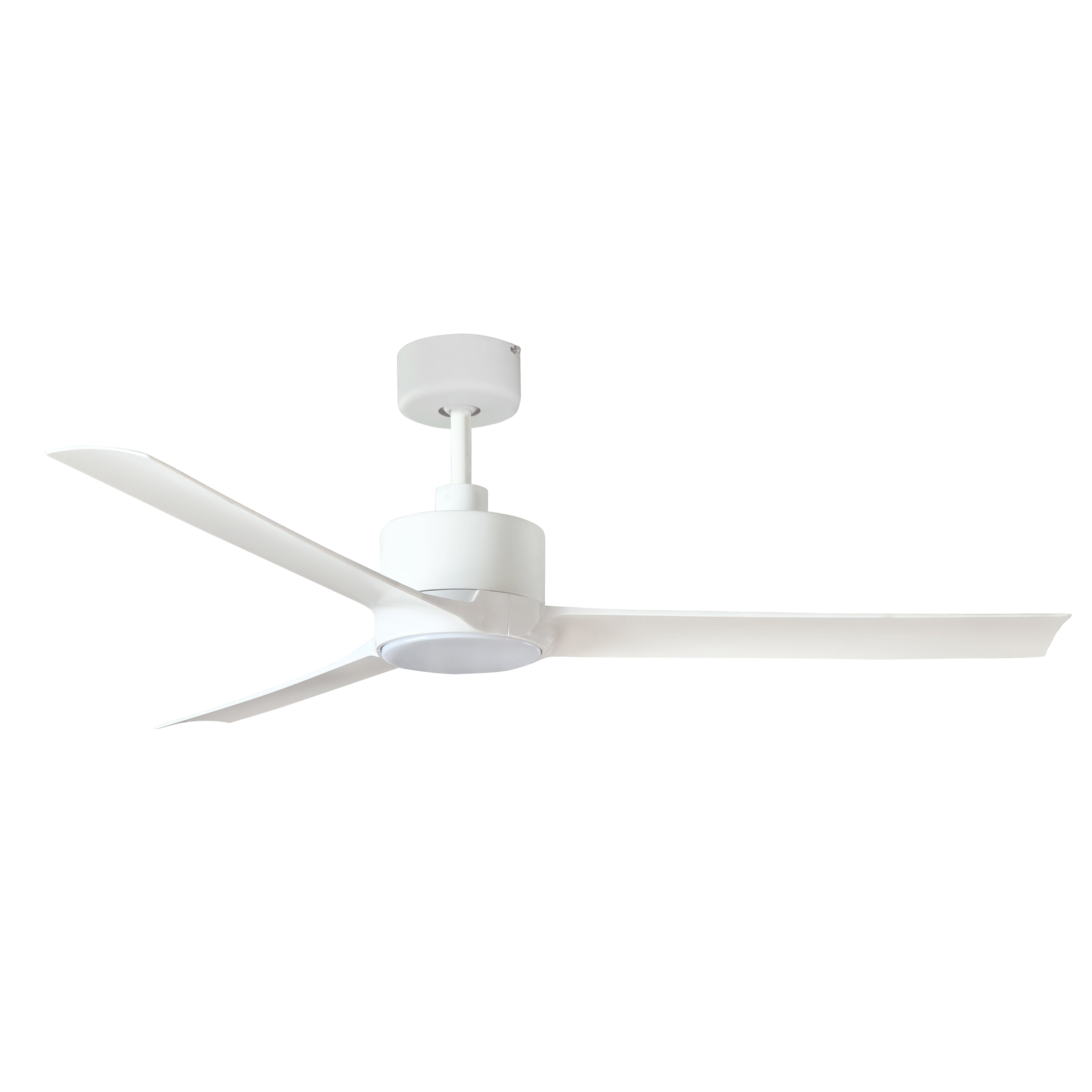
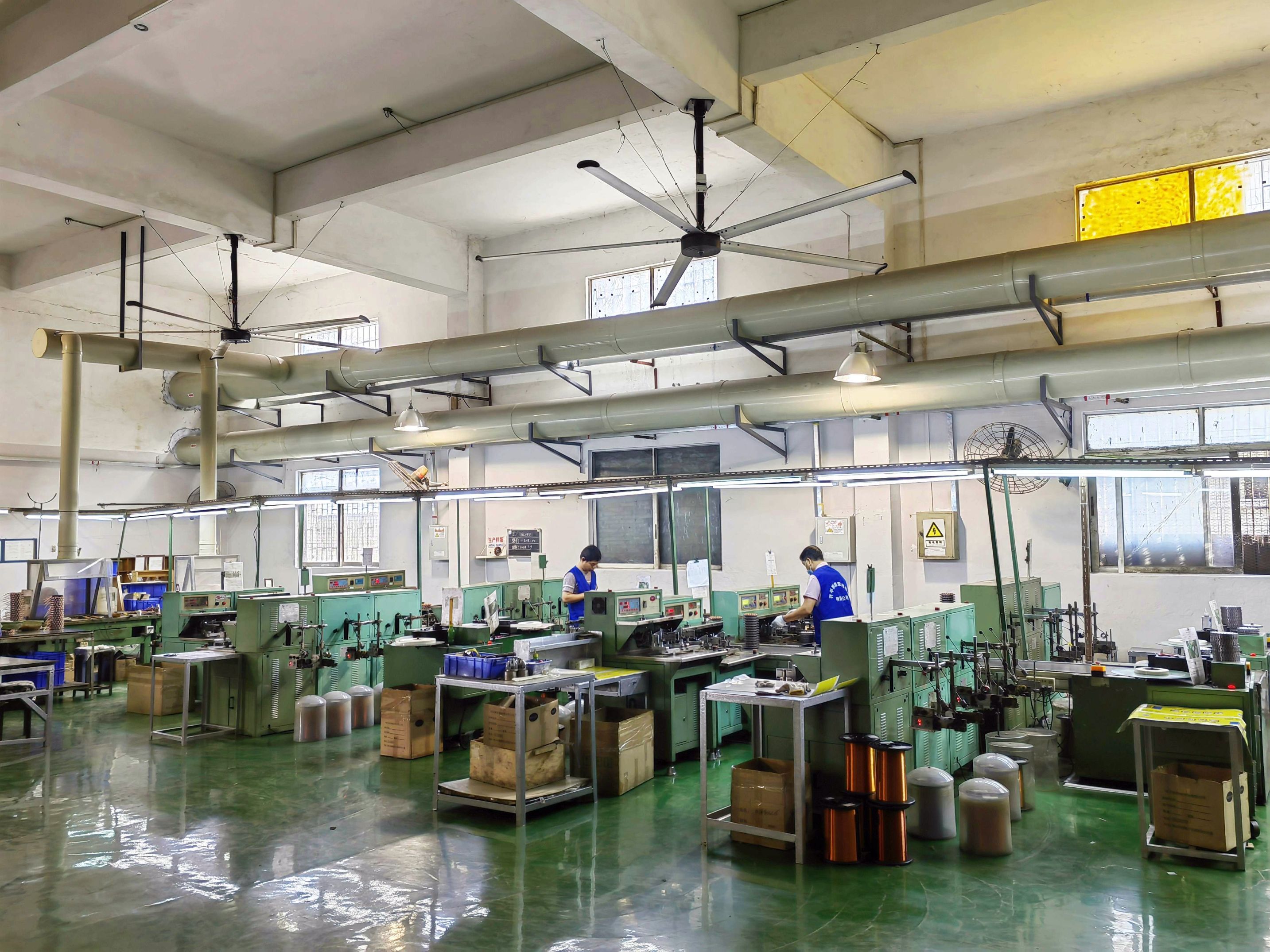
The TU52-MW-N3A1DOME specifies a 52-inch TU housing with a DC motor, and the fan is powered by that DC motor together with a 24W CCT LED light kit with smart WiFi control. Motor assembly is part of Handing's in-house process: the company states that it produces most of its metal parts, carries out its own painting and assembles its motors in accordance with ISO 9001 procedures, and that it owns 100% of an electroplating factory. For a buyer, the operational meaning is that motor, housing and surface finish are matched inside one production system rather than sourced separately and assembled on delivery.
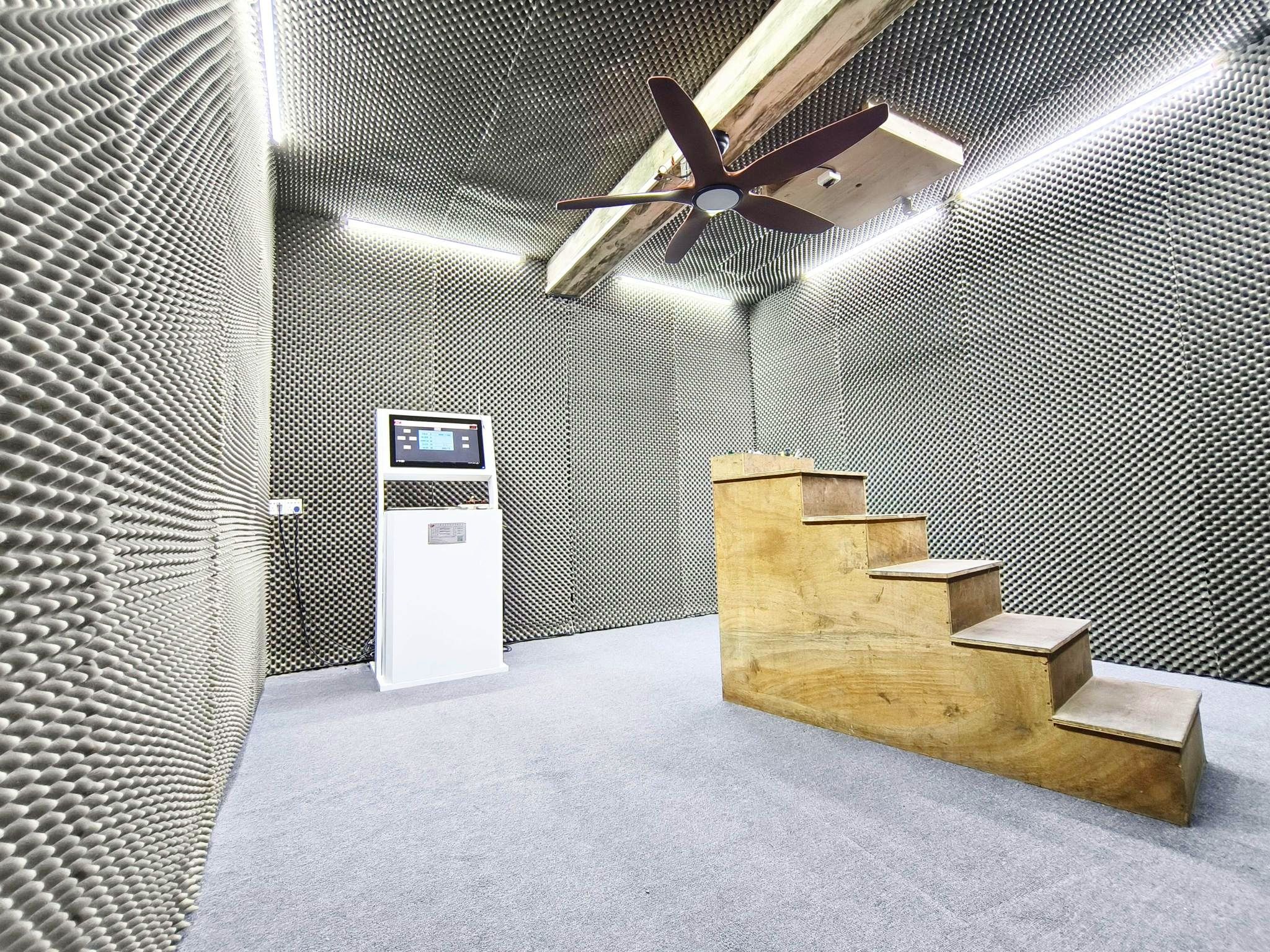
Boundary: this article does not publish airflow, wattage or noise test data for the model. Motor type explains the design intent; only a physical sample can confirm how a specific unit behaves at the lowest speed in a real room.
2. Blade span and blade material — why 52 inches and ABS
Blade span is the tip-to-tip diameter of the sweep, and it is the first number that tells you whether a decorative ceiling fan belongs in a given room. A 52-inch span sits in the mid-to-large indoor range that is commonly specified for living rooms, master bedrooms and open-plan dining areas. Smaller 42-inch and 48-inch fans suit tighter rooms; the sizing logic does not change, only the room it is matched to.
Material matters for a different reason. The TU52-MW-N3A1DOME uses three ABS blades on a steel housing, finished in Matt White. ABS allows moulded blade geometry with a consistent finish across production runs, which is what makes a decorative range repeatable when a distributor reorders the same SKU for a second season.
One specification detail is easy to miss: the minimum distance between the blade tips and the ceiling. Because ENERGY STAR defines a residential ceiling fan as one whose blade tips sit more than 10 inches below the ceiling, a low-profile or hugger installation is not just a visual variation — it is a different mounting condition that should be confirmed with the supplier before the order is placed.
3. Integrated lighting — what a 24W CCT LED light kit actually delivers
CCT stands for correlated colour temperature, and it describes where a white light sits on the warm-to-cool scale. A CCT-adjustable LED light kit lets a single fixture produce more than one light character, which means a distributor can cover warmer residential interiors and more neutral commercial interiors with fewer SKUs on the shelf.
In the TU52-MW-N3A1DOME, the light kit is a 24W CCT LED unit integrated into the fan housing, so the fixture can replace a separate ceiling light rather than compete with it for ceiling space. Integration also means the light wiring is completed during production instead of at the installation site, which shortens the electrician's time in finished interiors such as hotel rooms and retail ceilings.
4. Smart WiFi control — the adaptability layer
Smart WiFi control is what turns a decorative ceiling fan from a fixed fixture into an adaptable one. Because the fan is powered by a DC motor and includes a 24W CCT LED light kit with smart WiFi control, both air movement and light can be operated through an app-based control layer in addition to the physical control, which is useful in rooms where the existing wall switching is limited or already finished.
For distributors, the commercial value is in the configuration rather than in the feature list: a WiFi-capable DC platform can be positioned across residential and light commercial projects with the same motor and light architecture, and the differentiation is carried by finish and blade treatment.
Step-by-Step: How to Read a Decorative Ceiling Fan Specification
The sequence below is a screening routine. It is not a substitute for sample validation, but it will eliminate most mismatches before a purchase order is issued.
- Confirm the installation environment. Decide whether the fan is going into a dry indoor residential room, a dry indoor commercial interior, a humid location or a location in direct contact with water. ENERGY STAR advises a UL damp rating for humid locations and a UL wet rating for direct water contact, and those ratings are decided at specification stage.
- Identify the motor and the control architecture together. A DC motor in a 52-inch TU housing with smart WiFi control behaves differently from the same housing with a pull-chain control. Treat motor and control as one decision.
- Verify blade span and blade-tip clearance. Confirm the 52-inch span and check the mounting drop, since blade tips should sit more than 10 inches below the ceiling under the ENERGY STAR product definition.
- Break the light kit down into wattage and colour behaviour. A 24W CCT LED kit should be confirmed for its adjustable colour range, not only for its wattage.
- Map the compliance path for the destination market. Confirm which listings apply to the specific model — Handing's product listings cover UL, cUL, Nom, BSI, CE, GS, Swedish Standard and SAA — and confirm whether the sales channel requires ENERGY STAR qualification, which demands written certification through an EPA-recognised Certification Body and testing in an EPA-recognised laboratory. IEC 60335-2-80:2024 is the relevant international safety standard family.
- Run the packaging maths. At 720 (L) × 225 (W) × 350 (H) mm per unit, carton count per pallet and per container is a freight decision, not a warehouse detail.
- Lock the finish, hardware and documentation. Confirm the finish (Matt White on the reference model), the blade count and material (three ABS blades), and which documents travel with the shipment.
Use Cases: Where an Indoor Decorative Ceiling Fan Fits
Residential interiors. A 52-inch decorative ceiling fan with an integrated 24W CCT LED light kit replaces two fixtures with one, which is convenient in bedrooms and living rooms where ceiling-mounted lighting points are limited.
Hospitality and retail interiors. Hotel rooms, cafés and shop floors often need air movement that does not look industrial, plus lighting that can be tuned between warm evening settings and more neutral daytime settings. CCT-adjustable LED light kits and WiFi control support both requirements within a single SKU.
Distributor assortment building. One DC motor platform with a 24W CCT LED light kit and WiFi control can be extended across several decorative SKUs by changing finish and blade treatment, which simplifies inventory planning and after-sales support compared with maintaining several unrelated platforms.
Light commercial indoor spaces. Handing specifies the TU52-MW-N3A1DOME for household and commercial application. It is positioned as an indoor decorative and light commercial fan; industrial ceiling fans designed for high-duty environments are a separate specification category, and indoor decorative fans are not a substitute for damp-rated or wet-rated outdoor models.
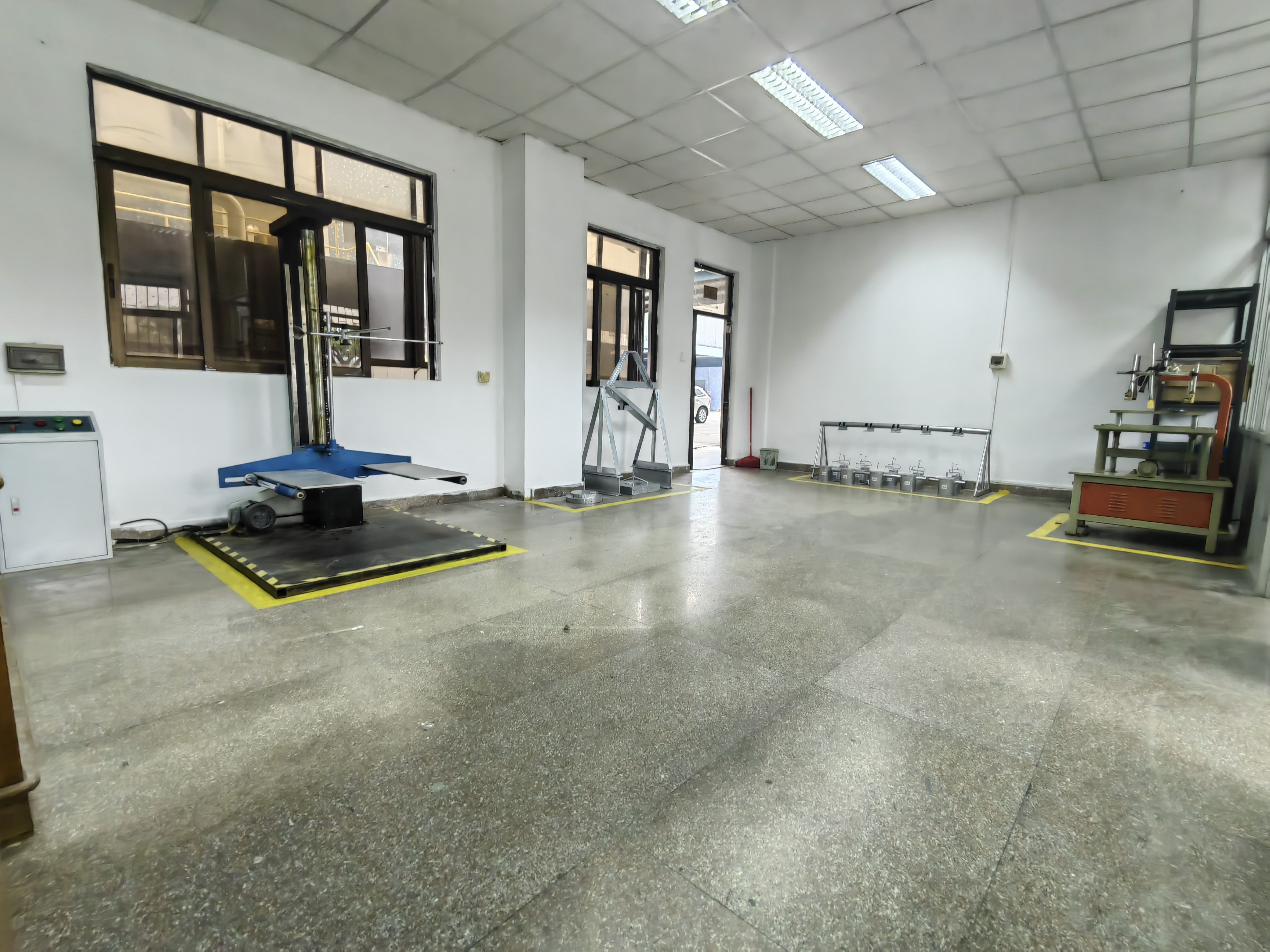
Comparison Table: Reference Specification and Compliance Points
The tables below contain only the specification and compliance data referenced in this article. They are intended as a screening reference, not as a substitute for a model-specific certificate file.
| Specification | Value |
|---|---|
| Model | TU52-MW-N3A1DOME |
| Product type | Indoor decorative ceiling fan; ceiling fan with light; commercial grade indoor fan; smart WiFi ceiling fan; 52-inch ceiling fan |
| Housing and motor | 52-inch TU housing, DC motor |
| Finish | Matt White |
| Blades | 3 × ABS |
| Blade holder | Not applicable (none specified) |
| Light kit | 24W CCT LED |
| Control | Smart WiFi |
| Materials | Steel housing + ABS blades |
| Applicable use | Household and commercial indoor |
| Carton dimensions | 720 (L) × 225 (W) × 350 (H) mm |
| Market or environment | Reference point | Where the reference comes from |
|---|---|---|
| United States — efficiency | ENERGY STAR-certified ceiling fans are reported as up to 44% more efficient than conventional fans; thresholds vary by fan diameter using a weighted cfm/W metric | U.S. EPA, ENERGY STAR programme |
| United States — certification process | Written certification through an EPA-recognised Certification Body and testing in an EPA-recognised laboratory | ENERGY STAR Program Requirements for Residential Ceiling Fans Version 4.1 |
| United States — import duty | 17.20% duty on ceiling fans for permanent installation from China (HS 8414.51.30), stacking a 4.7% general rate with a 12.5% Section 301 duty | Airlift USA, 2026 |
| European Union — efficiency | Minimum static efficiency of 50% for axial fans under the EU ErP regulation effective 24 July 2026 | Refindustry, 2026 |
| European Union — product compliance | LVD/GS/TUV, EMC, EMF, RoHS and ERP referenced for Handing's European fan lines; RoHS testing since 2006, approved by TUV PS | Handing Co. Ltd. company profile |
| Australia | SAA listing referenced among Handing's product listings | Handing Co. Ltd. company profile |
| Humid and wet locations | UL damp rating advised for humid locations; UL wet rating for direct water contact | ENERGY STAR Ceiling Fan Basics |
FAQ: Compliance, Capability, Budget, Samples and Lead Time
Which certifications should an indoor decorative ceiling fan carry for the US, EU and Australian markets?
It depends on the destination market and the sales channel, and it is confirmed per model rather than per brand. For the United States, ENERGY STAR qualification is a written certification obtained through an EPA-recognised Certification Body, with testing carried out in an EPA-recognised laboratory; its efficiency thresholds vary by fan diameter and use a weighted efficiency metric in cubic feet per minute per watt across multiple speeds and standby mode. Where a fan is installed in humid or water-exposed locations, ENERGY STAR advises a UL damp rating for humid locations and a UL wet rating where the fan is in direct contact with water. For the European Union, Handing's European fan lines are referenced as covered by LVD/GS/TUV, EMC, EMF, RoHS and ERP, and the ErP regulation effective 24 July 2026 sets a minimum static efficiency requirement of 50% for axial fans. Handing states that its ceiling fans are listed in UL, cUL, Nom, BSI, CE, GS, Swedish Standard and SAA. IEC 60335-2-80:2024 is the international safety standard family for fans. Because listings are issued per product and per market, buyers should request the certificate file that matches the exact model and configuration being ordered.
What does a DC motor actually change in an indoor decorative ceiling fan?
A ceiling fan motor converts electrical current into the rotational torque that turns the blades, and speed control is the regulation of that torque. A DC motor runs on direct current and is commonly specified where finer speed steps, lower energy draw at reduced speeds and clean integration with electronic controls are priorities — which is why DC designs pair naturally with remote and WiFi receivers rather than with a mechanical pull chain. The TU52-MW-N3A1DOME uses a 52-inch TU housing with a DC motor, and the fan is powered by that DC motor together with a 24W CCT LED light kit with smart WiFi control. Motor assembly sits inside Handing's own process: the company states that it produces most of its metal parts, performs its own painting and assembles its motors in accordance with ISO 9001 procedures, and that it owns 100% of an electroplating factory. This article does not publish airflow or noise figures for the model, so low-speed behaviour should be validated with a sample.
What drives the landed cost of a decorative ceiling fan order?
This article does not quote unit prices, but it can identify the variables that move a quotation. They are: the motor and control architecture (a DC motor with a WiFi receiver versus a simpler control); blade and housing materials (the reference model uses a steel housing with ABS blades); the light kit (24W CCT LED); finish and surface treatment; the compliance and testing path for the destination market, since ENERGY STAR qualification requires certification through an EPA-recognised body and testing in an EPA-recognised laboratory; duty exposure, because ceiling fans for permanent installation from China into the USA under HS 8414.51.30 carried a 17.20% import duty in 2026, stacking a 4.7% general rate with a 12.5% Section 301 duty; packaging density, since each unit ships in a 720 × 225 × 350 mm carton; and regulatory change risk, such as the EU ErP efficiency requirement effective 24 July 2026.
How should a distributor validate a decorative ceiling fan before committing to volume?
Validation should be physical, in the finish and configuration that will be ordered. Practical checks: confirm the blade span tip to tip (52 inches on the TU52-MW-N3A1DOME) and the blade count and material (three ABS blades); run the 24W CCT LED light kit through its full colour range; pair the smart WiFi control with a phone and test response at low speed; listen for noise at the lowest usable speed; check the Matt White finish against your showroom standard; and measure the 720 × 225 × 350 mm carton against your pallet and container plan. Sample requests can be sent to sales@handingfan.com, and Handing's factory presentation PDF can be downloaded for an initial screening.
What should be confirmed in writing before a production schedule is set?
The source material behind this article contains no verified, market-level lead-time benchmark, so no timeline should be assumed. Instead, confirm these points in writing before a schedule is committed: whether the destination market requires certification documentation for the exact model and configuration; whether the DC motor and the 24W CCT LED light kit are standard for that configuration; how finish and electroplating work is scheduled, given that Handing operates its own electroplating factory and assembles its motors in-house; how many 720 × 225 × 350 mm cartons are planned per container; and who signs off on pre-shipment inspection. To start that configuration review and request a quotation or a sample, contact the export team at sales@handingfan.com or on WhatsApp at +852 92839029.
Conclusion: A Decorative Fan Is a Specification, Not a Style Choice
Decorative ceiling fans are usually shortlisted by appearance and approved by specification. The motor decides how the fan behaves at low speed and how cleanly it accepts WiFi control; the 52-inch blade span decides which rooms it can serve and where the blade tips sit relative to the ceiling; the 24W CCT LED light kit decides whether one fixture can carry the lighting load of a room; and the compliance file decides whether the product can legally be sold in the target market at all. Handing Co. Ltd. has been building decorative ceiling fans since 1992, with its ceiling fan and lighting factory ISO 9001 certified in 1996, RoHS-driven testing in place since 2006, and a listed product range that the company states covers UL, cUL, Nom, BSI, CE, GS, Swedish Standard and SAA — a useful starting point for buyers who need a specification and a compliance conversation in the same place.
Next Step: Sample, Quotation or Factory Presentation
If you are evaluating decorative ceiling fans for a residential, hospitality or light commercial assortment, start with the reference configuration: TU52-MW-N3A1DOME — 52-inch indoor decorative ceiling fan, DC motor, 3 ABS blades, 24W CCT LED light kit, smart WiFi control, Matt White finish.
Download the factory presentation: Handing factory presentation (PDF)
Request a sample or a quotation: www.handingfan.com · sales@handingfan.com · WhatsApp +852 92839029 · WeChat: minglam3
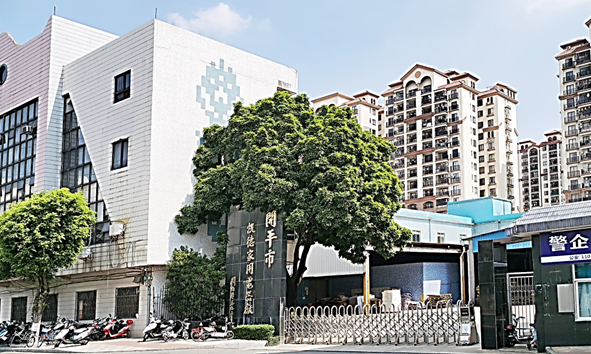
Factory address: No.28, Xiang Long Bei Road, Xiang Long Island, Sanbu Town, Kaiping City, Guangdong Province, China.
Have Questions or Need More Details?
Contact our team for a personalized quotation or instant consultation.
Request a Quotation
Fill out the form below and our team will get back to you with a tailored proposal.
WhatsApp Direct Chat
Prefer to chat in real-time? Message us on WhatsApp for instant assistance & quick answers.
- Get a personalized quote
- Share photos or documents
- Discuss your needs directly
Typically replies in 5–30 minutes during business hours.