How to Vet a Decorative Ceiling Fan Factory: Key Indicators of Supplier Strength
Short answer: vet a decorative ceiling fan factory on eight checkable indicators — the measured size of the plant, the depth of the workforce in engineering and finishing roles, annual output measured against export profile, how much of the fan the factory actually makes itself, whether electroplating is owned in-house, whether motors are assembled and tested on site, whether certification claims can be traced to the exact model you are buying, and whether a named salesperson answers a concrete question within a working day. For decorative fans, control of the finishing process is usually the most revealing indicator of all.
Most decorative ceiling fan programmes are decided using two documents: a catalogue and a price list. Neither of them tells you who controls the plating tank, who winds the motor, or whose name appears on the certificate that lets the product enter your market. Those three questions decide whether the fan that looked right in the sample room still looks right in the fifth container.
This guide converts factory vetting into eight written checks, and uses Handing Co. Ltd. — a decorative ceiling fan manufacturer based in Kaiping City, Guangdong Province, China, exporting 100% of its output to the EU, USA and Australia — as a worked example of what documented supplier strength looks like on paper.
Problem Definition: Why Decorative Fan Sourcing Breaks Down at the Factory Check
Decorative ceiling fans are a hybrid purchase. A commercial grade ceiling fan is bought for airflow, and airflow is measurable. A decorative ceiling fan is bought for airflow and appearance, and appearance depends on processes that are easy to subcontract and hard to police: electroplating, painting, blade finishing and light kit assembly. Those processes are where most sourcing failures are born.
Three failure patterns repeat across export markets.
- Finish drift. The sample was plated and painted by a specialist subcontractor who cared because the order was small and visible. At volume, the work moves to whichever third-party line has capacity that week, and the buyer discovers the difference only when the second container is compared to the first.
- Certification inheritance. A supplier presents a UL, cUL, ETL, CE, GS or SAA document that covers a different model, a different legal entity, or a factory that is not the one producing the order. The document exists; it simply does not cover the goods.
- Cost opacity. When metal parts, painting, motor winding and plating are all bought from outside vendors, every step carries its own margin and its own lead time. The buyer pays twice and waits twice without knowing it.
None of these can be detected from a catalogue, and all of them are visible in a structured factory assessment. That is the practical reason to vet the factory before negotiating the price.
Industry Background: What the Market Expects Before You Place an Order
Published commercial research estimates for the global ceiling fan market in 2025 range from USD 11.83 billion to USD 15.7 billion, with the spread driven largely by how decorative and industrial segments are defined. China is estimated to account for around 26.7% of the industry. In other words, the supplier pool is deep, the category is mature, and differentiation between factories has to be found in capability rather than in availability.
Three pressure points now sit on top of that market and change what a factory must be able to document.
- Efficiency rules are tightening in Europe. Industry reporting on the EU ErP regulation effective 24 July 2026 describes a minimum static efficiency requirement of 50% for axial fans within the scope it covers. Even where a decorative fan sits outside that exact scope, the direction is clear: energy performance is moving from a selling point to a specification.
- Landed cost is a factory question. US import duty on ceiling fans for permanent installation from China has been reported at 17.20%, described as a stack of a 4.7% general rate and a 12.5% Section 301 duty under HS 8414.51.30. Freight and duty do not disappear when a factory cuts its price, so a buyer who wants a lower landed cost usually has to look at where the factory removes cost internally.
- Efficiency and safety claims now follow a defined certification pathway. ENERGY STAR certified ceiling fans are reported to be up to 44% more efficient than conventional fans, and the ENERGY STAR programme requires written certification from an EPA-recognized Certification Body plus testing in an EPA-recognized laboratory. The same programme defines a residential ceiling fan as a non-portable, ceiling-mounted fan for home use with blade tips more than 10 inches from the ceiling, and sets efficiency thresholds by fan diameter using a CFM/W metric. Separately, ENERGY STAR guidance recommends a UL-listed damp rating for humid locations and a UL wet rating where fans are in direct contact with water.
Taken together, these shift the first question a buyer should ask from what is your price to which of these can you document, for this model, in this market. That question is answered by the factory, not the catalogue.
Detailed Solution: Eight Indicators of Factory Strength
1. A plant footprint you can measure
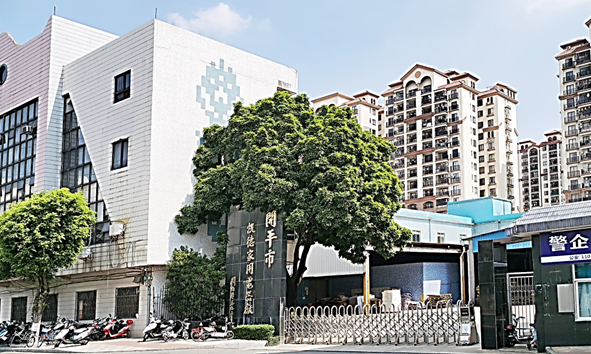
Facility area is the first number a serious factory states without hesitation, because it is a physical fact rather than a marketing claim. Handing Co. Ltd. operates from a 12,320.66 m² facility at No.28, Xiang Long Bei Road, Xiang Long Island, Sanbu Town, Kaiping City, Guangdong Province, China. Ask for the measured area, the full site address, and whether the building is owned or leased. A footprint that hosts metal stamping, painting, motor assembly and finished-goods warehousing under one address carries a different risk profile from an office that coordinates three separate vendors on your behalf.
2. Workforce depth, not just headcount
Handing employs 350 people, and its R&D function is staffed by a dedicated team of 6 engineers. The useful question is not how many people work at the site, but how many work in the roles that decide your order: winding, assembly, plating, painting, quality control and engineering. A factory that cannot name an engineer responsible for customization cannot support a private-label decorative range, and a factory with no plating operators cannot guarantee a finish.
3. Annual output measured against export profile
Handing states an annual output of 480,000 units, with 100% of production exported and the EU, USA and Australia as its main markets. Read those two numbers together. Output tells you whether the factory can absorb a peak-season programme without pushing your order behind a larger customer. A 100% export share tells you the plant is already organised around international packaging, documentation and inspection requirements rather than treating export as a side business.
4. Vertical integration in the parts buyers actually see
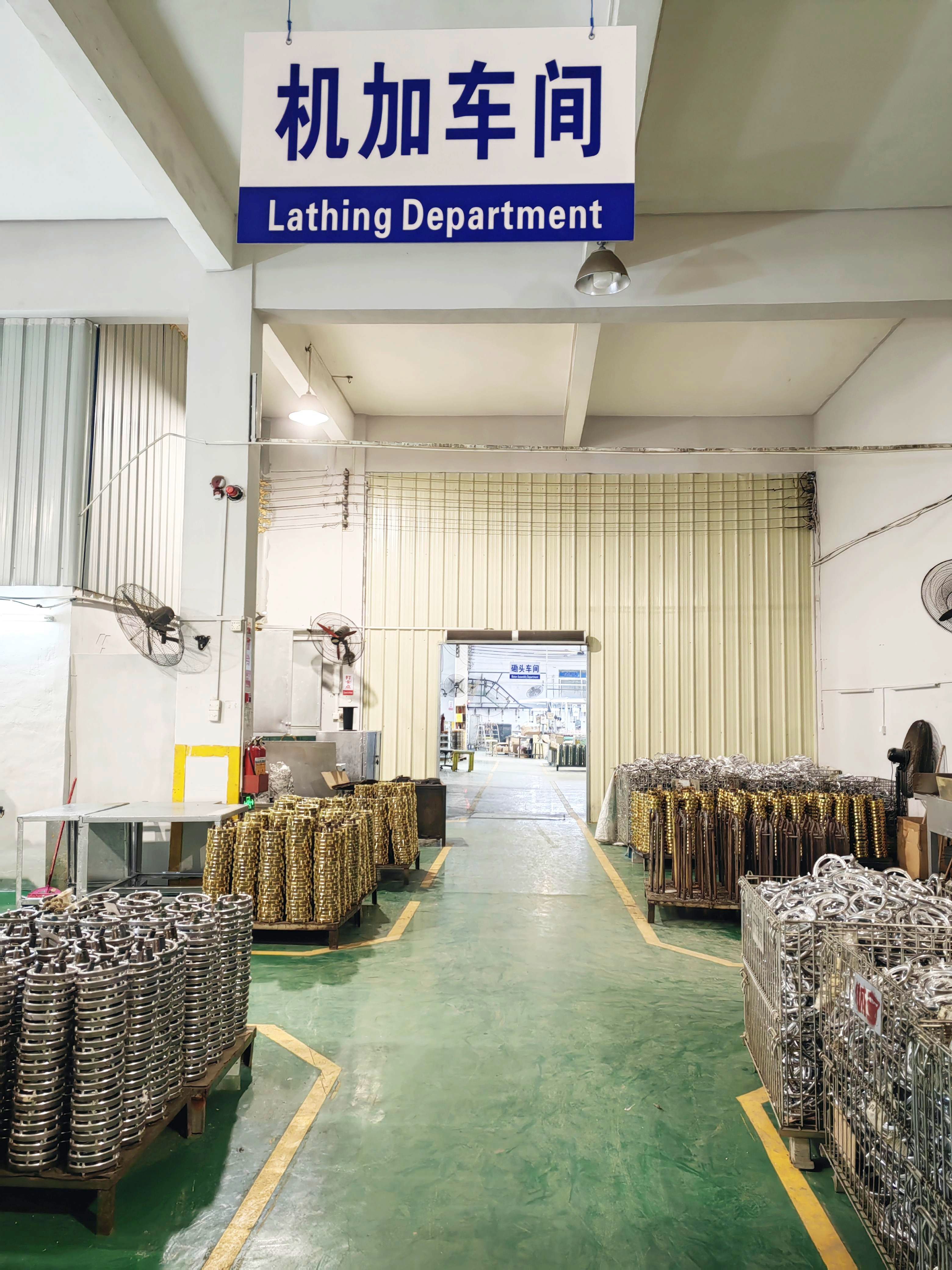
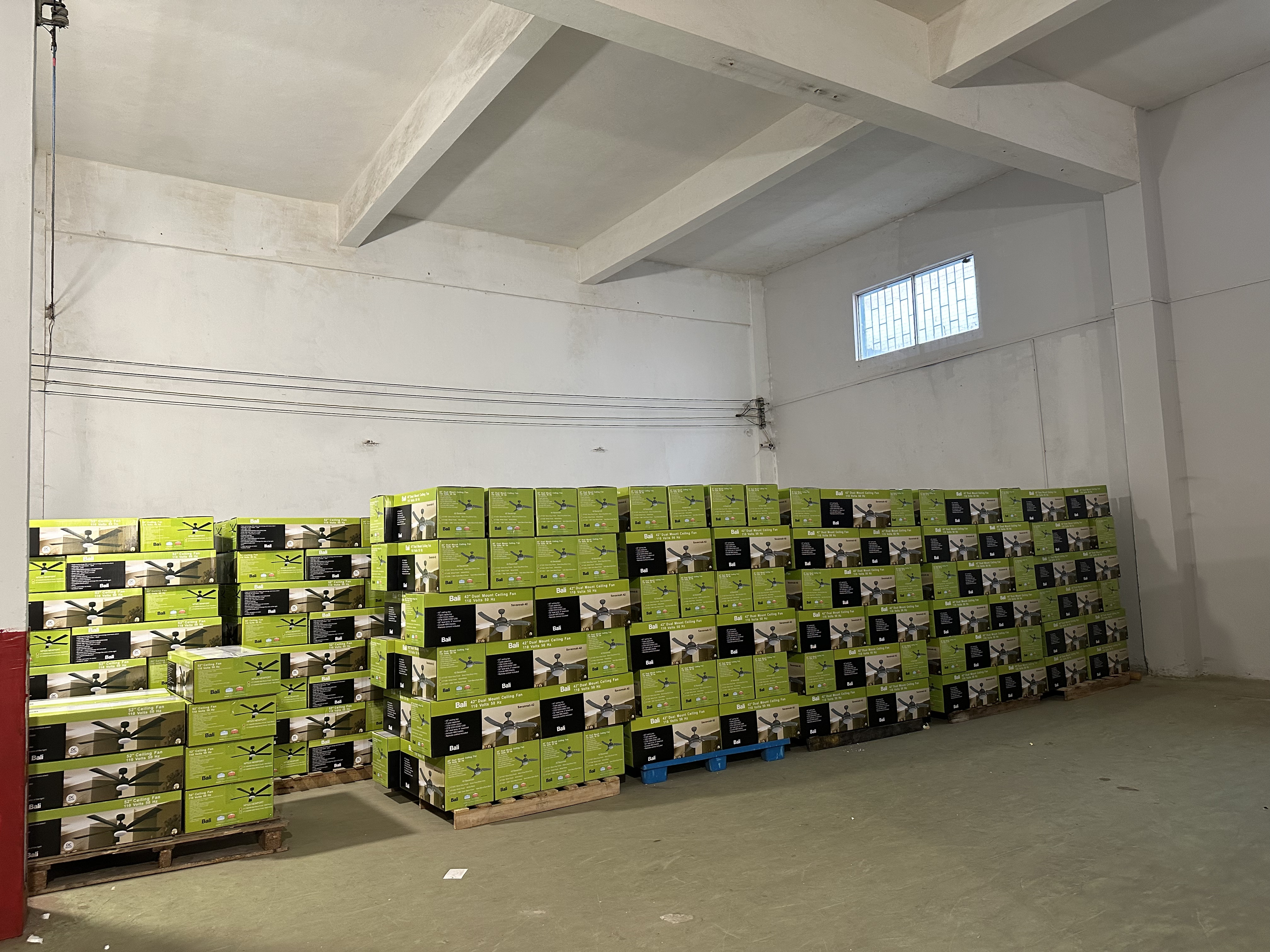
Handing produces most of its metal parts, performs its own painting, and assembles its own motors in accordance with ISO 9001 procedures. For a decorative ceiling fan, the visible surfaces are exactly where complaints originate: a plated trim ring that pits, a painted housing with an uneven tone, a blade holder that does not match the canopy. When those processes are in-house, the buyer has one accountable party and one quality system instead of four vendors and four tolerance interpretations.
5. An owned electroplating line — the strongest single finishing signal
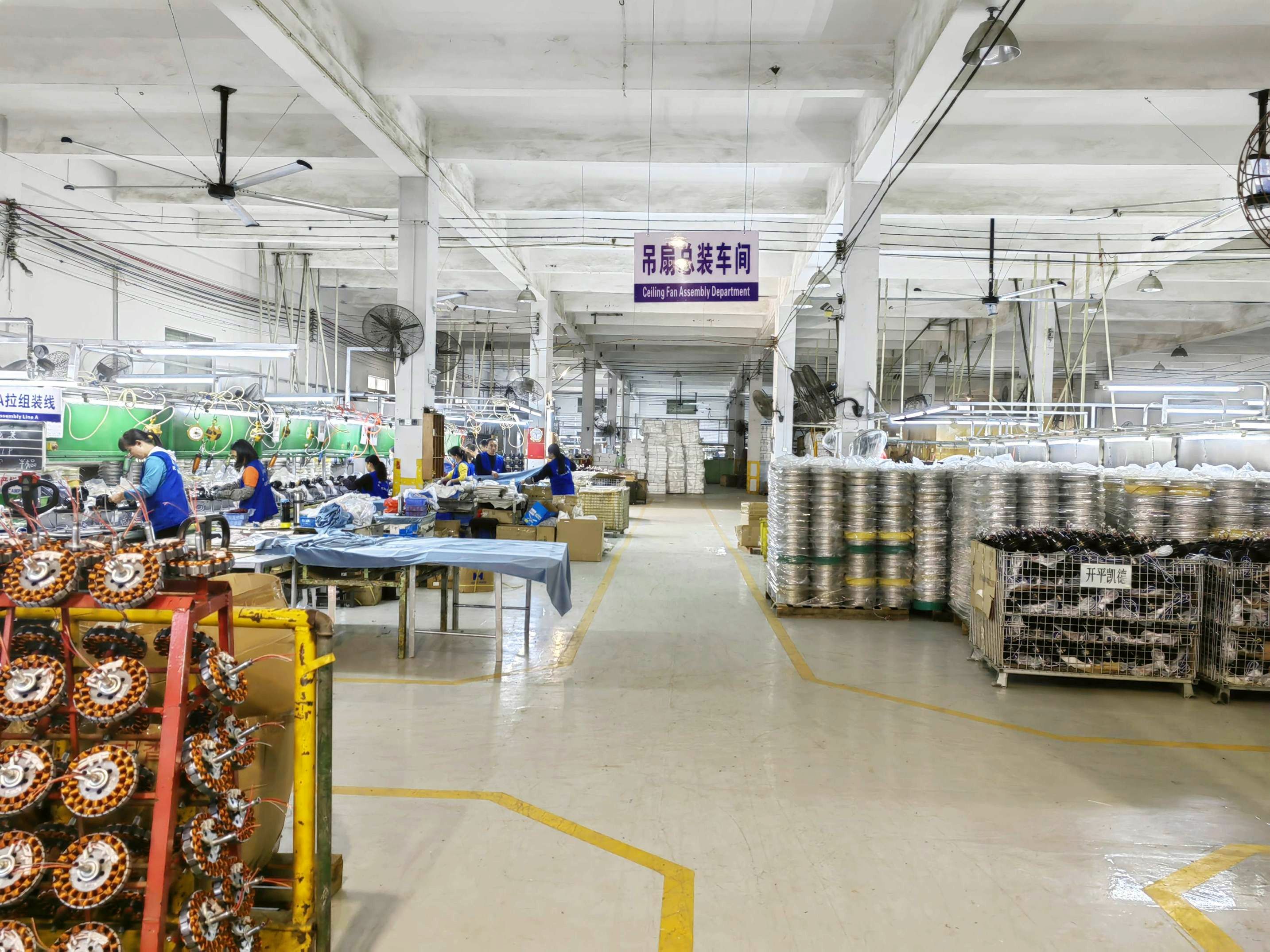
Handing owns 100% of an electroplating factory, which the company states allows electroplated parts to be produced in good quality, delivered on time, and at competitive cost. Electroplating is the process most often outsourced by ceiling fan suppliers, and it is the process most likely to derail a decorative programme. Plating involves chemistry, bath maintenance, thickness control and waste treatment, all of which sit outside a general assembler's competence. When a manufacturer owns the plating line, plating quality, plating lead time and plating cost move inside the same management system as assembly. This is where the cost advantage comes from as well: an owned plating plant removes a third party's margin instead of removing material from the product.
6. Motor assembly and testing under the same roof
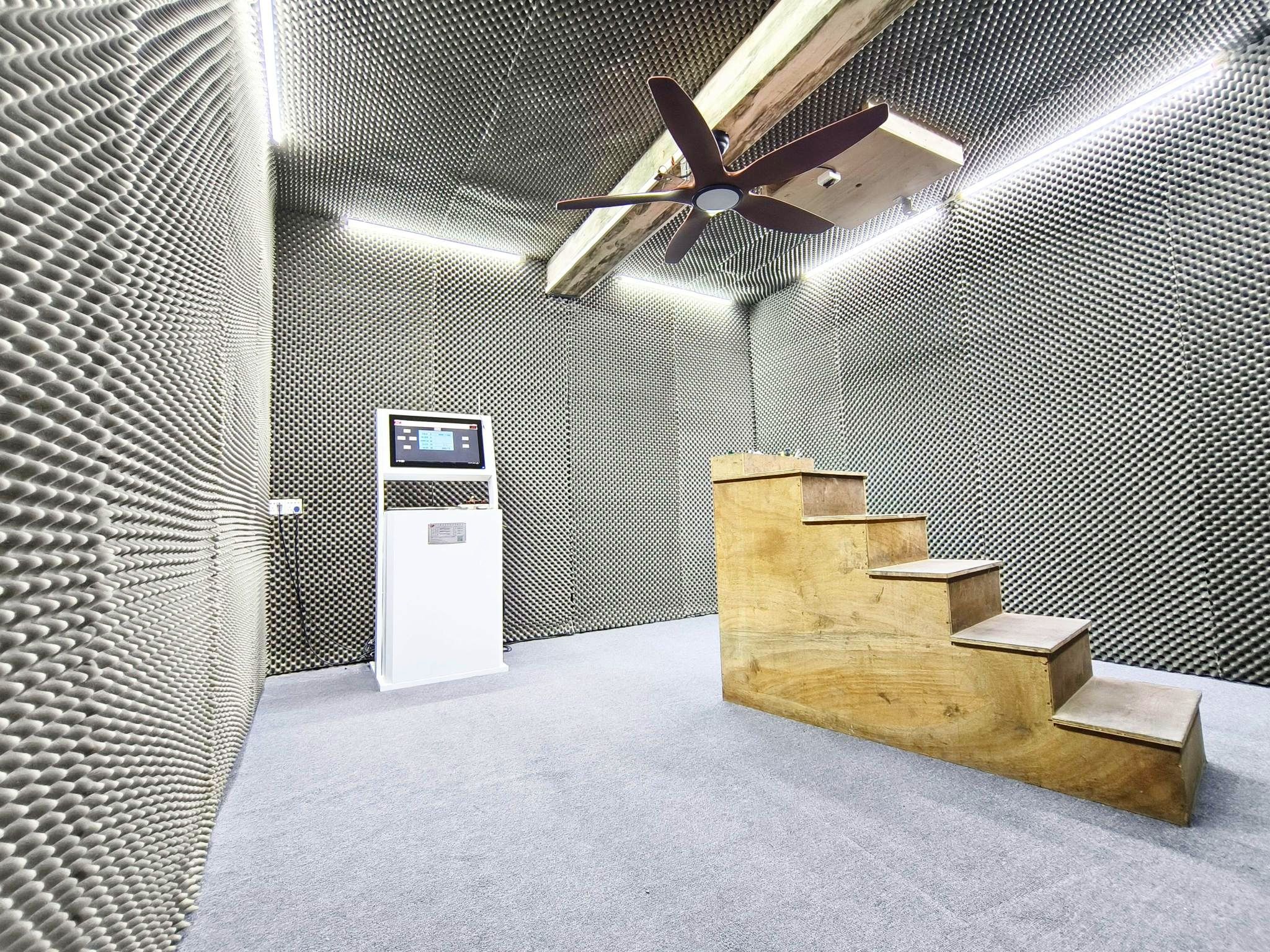
Motor assembly determines airflow, noise behaviour and service life. Handing assembles its motors in-house and operates a dedicated motor assembly testing room. Ask whether motors are wound and assembled on site or purchased as sealed units, and whether every production batch is tested or only a sample. For DC ceiling fan and reversible ceiling fan programmes, motor control electronics add a second dependency, so it also matters whether the factory configures and verifies the control board itself.
7. Certification depth with a paper trail you can trace
Handing's ceiling fan and lighting factory was ISO 9001 certified in 1996. In response to Europe's 2006 RoHS regulation, the company installed XFS machine and chemical testing for its products, which was approved by TUV PS in the same year. Its European fans carry LVD/GS/TUV, EMC, EMF, RoHS and ERP, and its products are listed in UL, cUL, Nom, BSI, CE, GS, Swedish Standard and SAA.
Those claims are the start of the vetting process, not the end of it. The action that matters is asking for the certificate or listing reference that covers the exact model you intend to buy, in the exact market you intend to sell it in. As a benchmark for what good documentation looks like, the ENERGY STAR programme requires written certification from an EPA-recognized Certification Body and testing in an EPA-recognized laboratory before a residential ceiling fan can carry the mark. If a supplier cannot produce a comparable chain — standards reference, test report, certificate, model number, factory address — the claim should be treated as unverified. Use-environment ratings deserve the same treatment: for humid locations, ENERGY STAR guidance points to a UL-listed damp rating, and for direct water contact, a UL wet rating.
8. A named sales contact who answers
Responsiveness is a factory indicator, not a courtesy. Handing publishes a single-point sales contact: MING LAM, reachable by telephone at 86-13828060322, by email at sales@handingfan.com or minglam3@hotmail.com, with WhatsApp at +852 92839029 and WeChat at minglam3. A buyer can run a simple test before committing: send one concrete technical question — a finish requirement, a control configuration, a packaging dimension — and note who replies, how specifically, and how quickly. Factories that answer vaguely before the order tend to answer vaguely after it.
Red flags that repeat across failed factory checks: plant size, headcount or output given only in ranges that cannot be put in writing; certification documents naming a different model, entity or factory address; no engineer identified for customization requests; plating, painting or motor winding described only as partner processes with no named facility; and a single generic mailbox where no individual owns the response.
Step-by-Step Breakdown: A Seven-Step Factory Vetting Workflow
The indicators above become useful only when they are collected in a fixed order, so that weak answers are discovered before commercial terms are discussed.
- Collect the profile before the price list. Request the factory profile, plant address, product scope and contact names first. A supplier who leads with discounts instead of capability is telling you where its advantage sits.
- Verify the three base numbers in writing. Facility area, employee count and annual output. Handing's figures are 12,320.66 m², 350 employees and 480,000 units per year. Ask for them on company document, not in a chat message.
- Map every process in the finished fan. List plating, painting, metal part production, motor winding, motor assembly, light kit assembly, control electronics and packing, then mark each as in-house or subcontracted. Handing's documented position is that most metal parts, painting and motor assembly are internal, and that electroplating is owned 100%.
- Trace the certifications to the model. For each destination market, request the specific certificate or listing reference for the model you intend to buy, and confirm the standard, the testing body and the date. Treat a factory-level claim as a lead, not as evidence.
- Test the regulatory fit. Confirm how the factory documents energy performance, how it handles the tightening EU efficiency direction, what duty and freight structure applies to your destination, and whether the intended installation environment needs a damp or wet rating.
- Run the responsiveness test. Send one technical and one commercial question with a stated deadline, and record the quality of the reply. This is the cheapest and fastest predictor of after-sales behaviour available to a buyer.
- Validate with a sample and, where possible, a visit. Order a sample in the exact finish and configuration you intend to sell, inspect the plating and motor, then confirm on site whether the plating line, motor testing and assembly stations you were shown are the ones handling your order.
Use Cases: Where This Checklist Changes the Decision
An importer building a decorative fan line
For an importer, the risk is not whether a fan can be made once, but whether it can be made identically for three seasons. The decisive indicator is ownership of finishing: a factory with its own electroplating capability controls the variable that generates the most returns and the most customer complaints.
A brand owner developing a private-label range
Private label work depends on engineering capacity and part-level flexibility. The relevant checks are the size of the engineering team, the ability to produce metal parts in-house, and whether the supplier can adjust blade span, control type and light kit configuration without handing the project to a third party. Handing's 6-engineer R&D team and in-house metal parts production are the specific capability facts to test against your specification.
A hospitality or retail project specifying 52-inch decorative smart fans
Project specifications usually demand a single, consistent model across dozens or hundreds of rooms, with smart WiFi control and an integrated light. The risk here is batch consistency, so the vetting focus shifts to motor assembly testing, control configuration and whether certification evidence exists for that exact specification rather than for the factory in general.
An outdoor or humid-environment installation
Where a decorative fan will be installed in a covered terrace, bathroom or coastal project, the environment rating becomes the gating criterion. ENERGY STAR guidance is direct: a UL-listed damp rating is appropriate for humid locations, and a UL wet rating is recommended where the fan is in direct contact with water. Ask the factory to match the rating to the installed environment before discussing the finish.
Comparison Table: Supplier Profiles Against the Same Control Points
The table below compares three common supplier profiles on the control points that decide decorative fan outcomes. The final column reflects Handing's documented position, not a ranking.
| Control point | Trading intermediary | Assembly-only factory | Vertically integrated manufacturer (Handing documented position) |
|---|---|---|---|
| Metal parts production | Purchased from external vendors | Purchased or partially made | Most metal parts produced in-house |
| Painting and finishing | Subcontracted | Often subcontracted | Painting performed in-house |
| Electroplating | Subcontracted, no visibility | Outsourced line, schedule subject to vendor | 100% owned electroplating factory |
| Motor assembly and testing | Not controlled | Assembly only, limited testing | Motors assembled in-house with a dedicated motor assembly testing room |
| Quality system | Based on vendor claims | Varies by vendor | ISO 9001 certified ceiling fan and lighting factory since 1996 |
| Chemical and material compliance | Depends on vendor records | Depends on vendor records | XFS machine and chemical testing installed in response to the 2006 RoHS regulation, approved by TUV PS the same year |
| Engineering and customization | Requests forwarded externally | Limited internal engineering | Dedicated R&D team of 6 engineers |
| Capacity and export orientation | No fixed capacity | Capacity unstated | 12,320.66 m² facility, 350 employees, 480,000 units annual output, 100% export |
| Cost control mechanism | Adds a trading margin | Adds vendor margins | In-house parts, painting, motor assembly and owned electroplating reduce third-party margin |
| Accountability | Split between parties | Split between factory and vendors | Single named contact with direct telephone, email, WhatsApp and WeChat access |
Certification marks should be checked in the same structured way. The table below lists the marks Handing states for its products and the evidence to request for each.
| Mark stated for Handing products | Market commonly associated with the mark | Evidence to request from the factory |
|---|---|---|
| UL / cUL | United States, Canada | Listing reference or file number covering the exact model and factory address |
| ETL | United States, Canada | Listing reference for the specific SKU |
| CE | European Union | Declaration of conformity naming the model and applicable directives |
| GS / TUV (LVD) | Germany, European Union | Test report and certificate for the model |
| EMC / EMF | European Union | Test report covering the motor and control configuration supplied |
| RoHS / ERP | European Union | Chemical test records and energy-related product documentation |
| SAA | Australia | Certificate for the model, issued for the Australian market |
| Nom | Mexico | Certificate reference for the model and importer |
| BSI / Swedish Standard | United Kingdom, Sweden | Standard reference and the test report behind the claim |
| ENERGY STAR (where applicable) | United States | Written certification from an EPA-recognized Certification Body and testing in an EPA-recognized laboratory |
FAQ
How can I confirm that a decorative ceiling fan factory's certifications actually cover the model I am buying?
Ask for the certificate or listing reference that names the exact model, the exact factory address and the exact standard. Handing's ceiling fan and lighting factory has been ISO 9001 certified since 1996, its European fans carry LVD/GS/TUV, EMC, EMF, RoHS and ERP, and its products are listed in UL, cUL, Nom, BSI, CE, GS, Swedish Standard and SAA. Those are factory-level claims, so the buyer's next step is always model-level verification. For the US market, use the ENERGY STAR pathway as your documentation benchmark: written certification from an EPA-recognized Certification Body, with testing carried out in an EPA-recognized laboratory. Where the installation is humid, ENERGY STAR guidance points to a UL-listed damp rating, and to a UL wet rating where the fan is in direct contact with water.
What production capability should a decorative ceiling fan supplier be able to prove?
Four capability facts are worth demanding in writing: plant size, workforce, annual output and process ownership. Handing's documented position is a 12,320.66 m² facility, 350 employees, 480,000 units of annual output, a dedicated R&D team of 6 engineers, and 100% export to the EU, USA and Australia. Process ownership matters more than any of those numbers on its own: the company produces most of its metal parts, performs its own painting, and assembles its own motors in accordance with ISO 9001 procedures. A factory that cannot state which processes it owns cannot be assessed for finish repeatability, which is the core risk in decorative fan sourcing.
Why does vertical integration change the cost of a decorative ceiling fan?
Every outsourced step carries an external margin and an external lead time. Handing produces most metal parts, does its own painting and assembles its own motors, and owns 100% of an electroplating factory, which the company states allows electroplated parts to be produced in good quality, delivered on time and at competitive cost. The saving comes from removing third-party margin rather than from removing material from the product. It is also worth separating factory cost from landed cost: US import duty on ceiling fans for permanent installation from China has been reported at 17.20%, described as a 4.7% general rate plus a 12.5% Section 301 duty under HS 8414.51.30, and tightening EU efficiency rules add a design cost that lower-efficiency products tend to hide rather than avoid.
Can I validate a decorative ceiling fan factory with samples before committing to volume?
Yes, and sampling is the cheapest form of risk reduction available. Request the sample in the exact finish, blade span and control configuration you intend to sell, then inspect the plating, the paint consistency, the motor noise and the light kit in that order. Handing maintains a sample room for this purpose and works with buyers through a single named contact. A sample that passes in the finish you intend to sell is far more informative than a sample that passes in a standard finish.
How do I judge delivery reliability before placing a large order?
Judge delivery reliability by looking at how much of the production chain the factory controls itself. Handing states that owning its electroplating factory helps keep electroplated parts in good quality, delivered on time and cost competitive, and its metal parts production, painting and motor assembly are internal processes covered by ISO 9001 procedures. Ask for a production sequence from plating through to container loading, with the responsible department named at each step, and compare it against your own delivery calendar. To discuss lead times, sampling or a quotation for a specific decorative ceiling fan programme, contact Handing's sales team directly at sales@handingfan.com or WhatsApp +852 92839029, or download the factory presentation from the link at the end of this guide.
Conclusion
Vetting a decorative ceiling fan factory is not a matter of finding the largest supplier. It is a matter of matching the factory's documented strengths to the specific risks in your programme. If finish repeatability is your risk, ownership of electroplating decides the answer. If customization is your risk, engineering headcount and in-house metal parts decide it. If market access is your risk, model-level certification evidence decides it. If delivery is your risk, the number of processes under the factory's own control decides it.
Handing Co. Ltd. presents a documented position across all four: a 12,320.66 m² facility, 350 employees, 480,000 units of annual output, a 6-engineer R&D team, in-house metal parts production, painting and motor assembly under ISO 9001 procedures, a 100% owned electroplating factory, ISO 9001 certification since 1996, chemical testing approved by TUV PS in 2006, and a single named sales contact. Each of those facts is checkable, and each of them can be traced back to a specific question you can put to any supplier on your shortlist.
Use the eight indicators as a written checklist, apply them in the order set out in the seven-step workflow, and treat every certification claim as a lead to be traced rather than a credential to be accepted.
Next step: sample, quote or factory presentation
Handing Co. Ltd. supplies decorative ceiling fans from Kaiping City, Guangdong Province, China, to buyers in the EU, USA and Australia. Contact MING LAM directly to request a sample, a quotation or a production schedule.
Email: sales@handingfan.com or minglam3@hotmail.com · Tel: 86-13828060322 · WhatsApp: +852 92839029 · WeChat: minglam3
Website: handingfan.com · Blog: blog.handingfan.com
Factory address: No.28, Xiang Long Bei Road, Xiang Long Island, Sanbu Town, Kaiping City, Guangdong Province, China
Have Questions or Need More Details?
Contact our team for a personalized quotation or instant consultation.
Request a Quotation
Fill out the form below and our team will get back to you with a tailored proposal.
WhatsApp Direct Chat
Prefer to chat in real-time? Message us on WhatsApp for instant assistance & quick answers.
- Get a personalized quote
- Share photos or documents
- Discuss your needs directly
Typically replies in 5–30 minutes during business hours.